




Thursday, April 9 at 1:30 pm – Amphi IMN
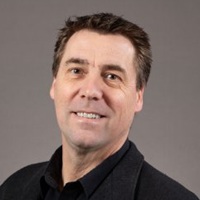
Christophe VALLEE
University at Albany, CNSE, USA
More than 50 years of plasma etching innovation: from RIE to ALE… and what’s next?
Abstract
In 1974, in their paper entitled “RF sputter-etching by fluoro-hloro-hydrocarbon gases”, N. Hosokawa et al. proposed to combine energetic ions with volatile products for plasma etching [1]. They came up with the idea of replacing argon with fluoro-chloro-hydrocarbon gases in rf diode sputtering equipment. They observed very high sputter-etching speeds, 10 to 20 times higher than those normally encountered with Si or Al. This marked the beginning of plasma etching combining ions and radicals, Reactive Ion Etching (RIE).
With this presentation I will discuss the following 50 years of work that followed the pioneer work of Hosokawa et al, in understanding, designing and optimizing plasma etching processes and reactors. I will show how plasma etching was modified to enable the transistor scaling areas: geometrical scaling (1975-2002), equivalent scaling (2003-2024), and 3D power scaling with transition to complete vertical structures (2025-…). The first scaling area saw the emergence of new reactors enabling the decoupling of flow and energy. The second was accomplished thanks to the transition from continuous flow processes to pulsed processes (pulsed plasma etching, Atomic Layer Etching). As we enter the third scaling area, selectivity will become predominant and temperature control will be a key parameter for the plasma etching processes, as illustrated by the recent development of cryogenic etching. Finally, future challenges for etching processes to meet sustainability and environmental concerns will also be addressed.
Having completed my thesis at IMN, I will take a little time at the beginning of my presentation to explain my career path since my thesis and what my current research activity is at CNSE.