

ANR project
LayereD Hydroxides for advanced energy storage devices
Dates:
October 2020 – May 2024
Project coordinator:
Thierry BROUSSE (ST2E team)
Partner laboratories :
- EDF SA Electricité de France – R&D Department
- Institute of Chemistry (ICCF Clermont-Ferrand)
IMN staff involved:
Laurence ATHOUEL, Olivier CROSNIER, Camille DOUARD, Philippe GUILLEMET, Fanch GUILLOU
Flaky hydroxides for innovative storage systems
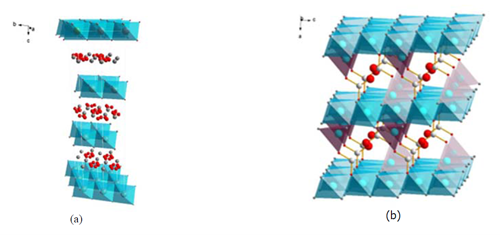
The increase in intermittent generation connected to the power grid demands greater flexibility, and requires the installation of “buffers” in the form of electrical storage. Current solutions, such as batteries or supercapacitors, do not provide satisfactory solutions to meet all the grid operator’s requirements, particularly in terms of power and energy density, cyclability, safety, recycling and cost. The LaDHy project (LayereD Hydroxides for advanced energy storage devices) proposes to develop an innovative storage medium, situated between a battery and a supercapacitor, with sufficient energy to ensure relevant storage, and capable of supplying or absorbing power peaks for 15 minutes for frequency control purposes. The device will feature electrodes with fast, reversible faradic reactions. These electrodes will be equipped with redox species belonging, among others, to the quinone family, trapped in lamellar host matrices. The latter are Lamellar Hydroxides, double (HDL) and single (LSH), formed by alternating sheets of mixed cation hydroxides (divalent/trivalent in the case of HDL, divalent only for LSH), and anionic intercalated species. These lamellar hydroxides can incorporate a wide variety of anions and can be tailored to suit the intended application and its specifications. Electroactivity will be achieved not only by electroactive intercalated anions in aqueous media, but also by exploiting the electroactivity of sheet cations. The redox potential window of the intercalated species is sufficiently wide to allow them to be used at both anode and cathode. The interest of LSH phases lies in the stronger iono-covalent anchoring of anions to the sheet, in contrast to the electrostatic interactions observed in HDL phases. This difference between the two matrices will be exploited for fine modulation of material properties, control of electrochemical transfer and cycling stability. The relatively inexpensive synthesis of these lamellar materials, based on soft chemistry methods, an aqueous electrolyte and their good recyclability, make them an attractive, clean and sustainable solution, suitable for the large-scale decentralized electricity storage that the LaDHy solution could provide. HDLs are already produced on a large scale, for example in agriculture and civil engineering. The use of an aqueous electrolyte will make storage devices safer than today’s batteries and supercapacitors, most of which operate in organic, flammable and potentially toxic environments.
The LaDHy project brings together two academic laboratories, ICCF and IMN, specialized respectively in the custom synthesis of new HDLs and LSHs, and in the formulation and characterization of new electrode materials for batteries, supercapacitors or hybrid systems, with EDF, a world leader in the production, transport and use of electricity. The latter has drawn up the specifications and validated the suitability of the proposed storage solution, which will be implemented from the synthesis of HDL/LSH and their shaping into electrodes, right through to the design of prototypes. The performance of these demonstrators will be measured with cycling curves obtained under real conditions on concrete applications, and compared with the expectations of industry. This new storage medium, combining energy and power in an aqueous electrolyte, aims to be safer, non-toxic, recyclable and less expensive, and capable of a greater number of cycles than current batteries for the target application.