

ANR project
Catalytic Sorbent bed for IMproved Production of methAnol
Dates:
October 2022 – April 2026
Project coordinator:
Institut de chimie et procédés pour l’énergie, l’environnement et la santé (ICPEES Schiltigheim)
Partner laboratories :
- IMN
- Catalysis, Polymerization, Processes and Materials (CP2M Lyon)
- Institut Charles Gerhardt Montpellier (ICGM Montpellier)
IMN staff involved:
Thomas DEVIC, Stéphane GROLLEAU, Michaël PARIS
Catalytic sorbent bed for improved methanol production
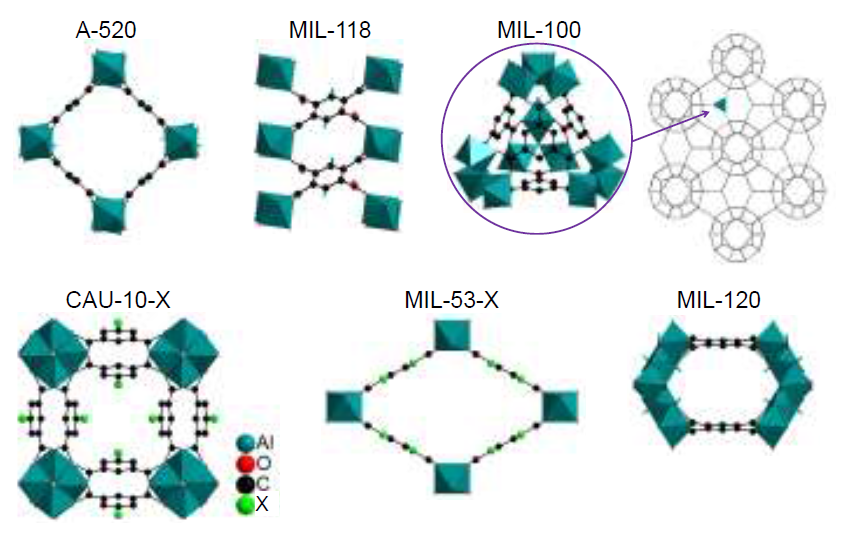
The SIMPA project is part of the Power-To-Fuels theme. It aims to displace the thermodynamic limitation of methanol production from CO2 and renewable H2 by combining a water sorption function and a catalytic function in the same bed. It will focus on developing catalytic sorbent beds of increasing technical sophistication. Conventional sorbents/catalysts will initially be studied in order to implement the various techniques aimed at characterizing water adsorption (sorption capacity, selectivity with respect to methanol and CO2, desorption) under the targeted conditions (typically 20 bar, 230°C) and assessing catalytic performance in the presence of sorbents. MOF-type sorption materials will then be studied and characterized under hydrothermal conditions. Catalysts for methanol synthesis from CO2 will be developed, to be active at low temperatures and more selective in methanol. Sorbent/catalyst bed geometries will be studied to optimize methanol yield. The reaction will be implemented in sequential sorption-reaction-desorption mode in two parallel reactors. Finally, all-in-one catalytic sorbents will be developed. Finally, beyond experimental proof in sequential mode, multi-scale modeling (sorption, diffusion, chemical kinetics, reactor, sequential mode process) will enable us to propose optimal operating conditions and cycling strategy for the water sorption-assisted methanol synthesis reaction at the end of the project.