

ABELLAN Patricia
Chargée de Recherche CNRS
Position
Since 2020 CNRS Researcher (CR CNRS), IMN, CNRS
Former positions
- 2019 –2020 Research Scientist CDD in Materials Chem. (Next Junior Talent Chair), IMN, CNRS
- 2015 – 2019 Staff Research Scientist, SuperSTEM Laboratory, EPSRC National Research Centre for Advanced Electron Microscopy, UK
- 2015 – 2019 SuperSTEM research fellow, University of Leeds, UK
- 2012 – 2014 Chercheur postdoctoral, Pacific Northwest National Laboratoy, USA
- 2011 – 2012 Chercheur postdoctoral, University of California-Davis, USA
Main research topics
- Solid-liquid interfaces on hybrid and biomaterials probed using electron microscopy;
- The development and application of new electron microscopy methods for properties-structure relationship of beam sensitive materials and radiolysis quantification in the electron microscope.
Biography
Patricia Abellan is a CNRS researcher at the Institute of Materials of Nantes (IMN) Jean Rouxel, Nantes University, since 2019. She received her BSc in Physics from the Aalborg University (Denmark) and her Ph.D. in Materials Sciences from the Autonomous University of Barcelona and Institute of Materials Science of Barcelona (ICMAB-CSIC), Spain, in 2011. She has held postdoctoral positions at the University of California – Davis and at the Pacific Northwest National Laboratory, USA, before taking a staff research scientist position at the SuperSTEM Laboratory (Daresbury, UK) in 2015. Her research focuses on the study of solid-liquid interfaces on hybrid and biomaterials using electron microscopy as well as on the elucidation of the radiation chemistry and radiation physics driving the processes at liquid-solid interfaces induced by the electron beam in an electron microscope. In 2013 she received the Best Ph.D. Thesis Award from the SME, in 2019 she was the laureate of the NExT Junior Talent program and in 2023 she won an European Research Council (ERC) Consolidator Grant. She has given over 35 invited presentations at international conferences and academic institutions on the development and application of electron microscopy methods.
Current research projects
- Osteocytes extracellular vesicles cargos: a new approach for regenerative medicine of bone tissue (OVERbone), ANR PRC (ANR-20-CE18-0015); national collaborative project (2 partners), 505.3k€ (149k€ for WP2), 2021-2025, Role: WP2 leader
- Dosimetry of Ultra-High Dose-Rate Electron Beams at Solid-Water Interfaces in Electron Microscopy: A Key Advance in Hydrated Samples Research (DREAM-SWIM), HORIZON-ERC CoG (project 101124066); individual project, 2.1 M€, 2024-2029, Role: PI
- Intensified PRocess coupling reaction and separation using Enzymes-functionalized Membranes for the recovery of bIomolecUles from Microalgae (PREMIUM), ANR PRCI (ANR-23-CE51-0059); international collaborative project (3 partners), 700k€ (207.7k€ for WP), 2024-2026, Role: Co-PI
- OPerando analyses and modelling of INterface dynamics and CHARGE transport in lithium-ion batteries (OPINCHARGE), HORIZON-RIA, (HORIZONCL5-2022-D2-01; proposal 101104032); international collaborative project (10 partners), 5.7 M€ (710 k€ for WP), 2023-2026, Role: Partner/Participant
Activities in the research community
- Member of the French microscopy society (SFmu), French BIOMAT, Spanish microscopy society (SME), European Microsc. Society (EMS), Microscopy society of America (MSA)
- Member of the Proposal Review Panel of the European Research Infrastructure ReMAde@ARI project, since 2025
- Member of organization committee of the annual congress of l’association française des biomatériaux (BIOMAT) 2026
- Member of the Access Committee (AC) of the Spanish ELECMI (elecmi.es), since 2022
- Member of the Transnational Access proposal evaluation committee (TAPEC) in the European ESTEEM3 project, 2022-2023
- Member of the panel of independent experts of the French METSA research federation, since 2022
- Member of the Editorial Board of the journal Micron, Elsevier, since 2019
- Member of CINT External Proposal Review Board, DOE Center for Integrated Nanotechnol. Sandia National Laboratories, since 2018
- Guest editor (managing editor) of Special Issue in Liquid-phase EM in Micron
- Member of Scientific proposal internal review panel, EPSRC SuperSTEM Lab, 2015-2017
- Symposium organizer at major international conferences including European-Materials research society (E-MRS) 2019 Fall Meeting, Warsaw, Poland; EUROMAT 2021, Graz, Austria (virtual conference); Microscopy & Microanalysis (Portland 2019 and Minneapolis 2023) and Colloque SFµ 2023, SDM2: In Situ, operando, Rouen, France
- Discussion leader (2), Gordon Research conferences (GRC) on liquid-phase EM, 2020 & 2024, Italy
- Panel Discussion at Biophysics & Physical Microscopy conference 2023, Institute of Physics, London
- Keynote speaker, 19th International Microscopy Congress 2018, Sydney, Australia
o Session chair at international conferences, including Microscopy & Microanalysis 2017, 2019 and 2023, E-MRS 2018 and 2019 Fall meetings, GRC on liquid phase EM 2020 and 2024, EUROMAT 2021, Colloque SFµ 2023 - Program chair Pre-meeting congress on radiation beam damage, prior to Microscopy and Microanalysis 2017, 70 participants, St. Louis, USA and Third Virtual workshop of MaterialWell (2022)
- 42 invited talks at international conferences (31) and research/academic institutions (11)
- Member of PhD thesis jury (2), University of Basque Country, CIC NanoGUNE 2025 and CEA-Leti at the University of Grenoble Alpes 2021
- Co-organizer of the physics of materials and nanostructures (PMN) group scientific seminars, since January 2021
- Member of jury for best student presentation awards at international conferences, including symposium L in E-MRS 2018 Fall meeting, conference MMC2019 and GRD NanOperando 2019
- Member of local organization team: 7th biennial SuperSTEM Summer School, 2018, UK
Distinction
2013 Best Ph.D. Thesis in Materials Science Award (biennial 2011-2012). Awarded by the Microscopy Society of Spain (SME)
Patent
Nanoparticles, Methods for Producing Nanoparticles and Nanoparticle Generators. J.W. Grate, N.D. Browning, P. Abellan, U.S. patent number 10500228 filed in 26/04/2017, published in 10/12/2019
ABELLAN Patricia
Chercheure équipe PMN
prenom.nom@cnrs-imn.fr / 02 40 37 63 39
BERTHEBAUD David
Chargé de Recherche CNRS
BERTHEBAUD David
Chercheur équipe MIOPS
prenom.nom@cnrs-imn.fr / 02 55 11 61 01

BESLAND Marie-Paule
Directrice de recherche CNRS
Fonctions :
- Directrice de Recherche CNRS en section 08 (ancienne section)
- Oct. 2019 - Adjointe au Directeur Scientifique Référent (ADSR), sites Limousin-Poitou et La Rochelle
- Oct. 1988 Recrutement CR2 CNRS Ecole Centrale de Lyon
Qualifications :
- 2008 Habilitation à Diriger les Recherches- Université de Nantes (20 Janvier 2008) : « Matériaux en Couches minces par Procédés Plasma »
- 1989 Docteur Université Montpellier-Sciences des Matériaux (13 avril 1989)
- 1985 Ingénieur ENSCM (Ecole Nationale Supérieure de Chimie de Montpellier) (Juin 1985) - Option Chimie des Matériaux et DEA Sciences des Matériaux
- 1983 Maitrise Chimie - Université Nantes
Expertises :
- Matériaux en couches minces par procédés assistés plasma (PEPVD, PECVD),
- Corrélations Procédé-Matériaux,
- Matériaux Diélectriques, Oxydes binaires, ternaires, quaternaires, Chalcogénures, Nitrures, Oxynitrures,
- Interfaces, Dispositifs pour la micro-électronique, l’Energie, la Photocatalyse,
- Caractérisations structurales et physico-chimiques (XPS, AFM)
Principales thématiques de recherche :
Mon projet d’entrée au CNRS (1988) était l’optimisation de l’interface SiO2/InP, j’ai ainsi développé (1988-1996) la Passivation des matériaux III-V : traitements de surface, oxydation et nitruration par plasma puis dépôt de diélectrique (SiO2 et SiNx) par procédés plasma froids PECVD-ECR (1988-2000). En parallèle (2000-2003), j’ai mis en œuvre un réacteur de gravure ICP pour la gravure de nitrures d’éléments III (III-N) en chimie Chlore.
AlN pour le management thermique : initiée en 2005 avec M.A. Djouadi (IMN) dans le cadre d’une thèse CIFRE avec Thales III-V Lab (S. Delage, C. Brylinski), il s’agissait de réaliser des couches minces d’AlN, bon conducteur thermique pour des transistors de puissance hyperfréquence, HEMT piézo-électrique à base de GaN (HEMT GaN), afin d’assurer le management thermique et la passivation primaire (Barrière de diffusion et évacuation de la chaleur générée en fonctionnement). Au cours de deux thèses (C. Duquenne-2008 (CIFRE Thales) ; B. Abdallah-2009 (Gvt Syrien)), le dépôt d’AlN et ses propriétés thermiques ont été optimisés. En collaboration avec le CRHEA (Sophia Antipolis), l’obtention d’AlN en épitaxie sur AlGaN et sur AlN a été démontrée (substrats MBE-CRHEA). (2005-2012)
Oxydes complexes par Pulvérisation Magnétron. Cette thématique a été initiée avant mon arrivée par P.Y. Tessier et L. Brohan au cours de la thèse de M-W CHU (2002). Dès mon arrivée en mutation à Nantes (2003-2008), j’ai mis en place un réacteur dédié (2003) et ai poursuivi la thématique jusqu’en 2008. Les résultats obtenus ont confirmé la pertinence de la pulvérisation magnétron pour le dépôt de matériaux ternaires et quaternaires, en particulier comparée à l’ablation laser (PLD) qui limite les surfaces de dépôt au cm2. Ceci a constitué la base des études suivantes sur d’autres matériaux, dans le cadre de deux thèses à visée applicative et industrielle (Emeline Souchier (BDI CNRS-ST Microelectronics, 2006-2010) : étude du dépôt du matériau GaV4S8 en collaboration PCM/PMN et Fatiha Challali, (2007-2010) (Thèse CIFRE MHS) : étude du dépôt d’oxydes à haute constante diélectrique (BST, TiTaO) et forte résistance (TiON). Ces études ont été initiatrices de la thématique sur les isolants de Mott. (2003-2011)
Les isolants de Mott sont des matériaux aux propriétés exceptionnelles, leur obtention en couche mince a ouvert la voie à de nombreuses applications. Une nouvelle électronique, nommée « Mottronique », permet la production de mémoires de Mott intégrées sous forme de couches minces pour le stockage d’informations (Projet IPCEI) ou encore la fabrication de réseaux de neurones et synapses économes en énergie pour l’intelligence artificielle (Projet région Mott-IA). (2005-2025)
Les matériaux pour l’énergie constituent une nouvelle orientation des activités de l’équipe PCM (Plasma Couches Minces) en collaboration avec ST2E (Stockage et Transformation Electrochimique de l’Energie) dans le domaine du micro-stockage de l’énergie. Il s’agit, en particulier, d’apporter la versatilité des procédés assistés plasma pour l’élaboration de matériaux pour micro-supercondensateurs et micro-batteries. (2021 -2027)
Projets de recherche en cours
- 2023-2027 ANR NACELL : Resp. Scientifique IMN, Post-doc 12 mois, 118 K€
- 2023-2027 Contrat Européen IPCEI avec ST-Microelectronics (porteur PMN)
- 2022-2027 Projet région Mott-IA (2,5 M€) Porteut L. Cario (PMN)
- 2024-2028 ANR ADN, Porteur C. Villeneuve (LAPLACE)
Activités dans la communauté de recherche :
- 2024-2025 Co-responsable GT « Matériaux », 2ème Enquête Microélectronique pour DRE CNRS
- 2018-2019 Co-responsable GT « Matériaux », Initiative Microélectronique pour INSIS-CNRS
- 2016-2023 Membre nommée au comité National CNRS, section 08 : 2016-2021 et 2021-Juin 2023
- 2016-2022 Directrice du GDR 3660 OXYFUN, Membre du bureau (Janvier 2014-Juillet 2016)
- 2015-2019 Représentante CNRS au CA INSA Centre Val de Loire
- 2005- 2013 Membre du bureau du C’Nano Nord-Ouest, correspondante région Pays de la Loire
- 2005- 2013 Correspondante Valorisation IMN auprès DR17-CNRS
- 2016-2025 Membre de 23 Comités de sélection (COS)
- 2008-2025 Participation à 100 jurys de thèses (86) et HDR (14) dont 60 Rapports
Activités d’expertise :
- 2017 - 2024 : Membre Comités d’Evaluation HCERES : LPICM (Palaiseau) ; XLIM (Limoges) ;
- GREMAN (Tours) ; CRHEA, Nice ; UDSMM (UCLO), GEMaC (UVSQ), GeePs (Paris Saclay)
- 2018 - 2025 : expertise projets ANR pour CES 08, CES 09, CE24, ANR ASTRID, CE05 (13 Projets)
- 2015 - 2017 : Evaluation pré-projets (78 Projets) et membre CEP ANR (CES 09) Défi 3 (30 projets)
- 2009 -2014 : Membre Comité Evaluation ANR P3N puis P2N : 2009, 2010, 2011,
- Comité Evaluation ANR Blanc SIMI 4 (2013), 2 comités AERES (section 08 CNRS, 2014)
- 2010 - 2014, 2018 : Revues de projets ANR à mi-parcours (30 projets) et Expertise 18 projets ANR
- Autres expertises : DFG Elan (Germany) ; Fonds Collège-Industrie Québec (Canada) ; 2015 : Nano IDF et projet IDEX pour Université Strasbourg ; 2016 : Projet BQR INSA Lyon ; 2019 : Univ. Lyon et Marseille; 2018-2019 : Projets CEFIPRA (Collaboration France-Inde) ;
Biographie :
Dans toutes mes activités, j’ai le souci du collectif, de l’interdisciplinarité et un certain goût du risque. Physico-chimiste des matériaux et Directrice de recherches CNRS à l’Institut des Matériaux de Nantes Jean Rouxel (IMN) : après une maîtrise de chimie à Nantes, un diplôme d’ingénieur de l’Ecole Nationale Supérieure de Chimie de Montpellier (ENSCM) et un doctorat en Sciences des Matériaux à Montpellier, j’intègre le CNRS en 1988 à l’Ecole Centrale de Lyon au laboratoire LPCI puis LEAME (devenu LEOM, puis INL). En charge d’un réacteur de dépôt PECVD-ECR, j’ai développé des procédés de passivation des Semi-conducteurs III-V et dépôt en couche mince de matériaux diélectriques pour la Microélectronique. Arrivée en mutation en 2003 à Nantes, j’ai obtenu une habilitation à diriger des recherches en 2008 « Du matériau fonctionnel au dispositif », et développé des procédés de dépôt par pulvérisation magnétron réactive pour de nombreux et nouveaux matériaux pour la réalisation de dispositifs pour plusieurs domaines (Microélectronique, Energie, Photocatalyse). Depuis plus de 20 ans, au sein du groupe développant les isolants de Mott, et plus largement au sein de l’équipe PCM, j’apporte mon expérience dans le domaine des matériaux en couche mince. Les travaux du groupe ‘’Mottronics’’ (PMN/PCM) sur les isolants de Mott aux propriétés exceptionnelles ont été récompensés par le prix Félix Robin 2023, décerné par la Société française de physique au groupe de cinq permanents impliqués pendant les JMC 2024 à Marseille.
Enseignement :
- 2008-2018 : Co-Responsable du module « Couches Minces : Elaboration, caractérisations et Applications » (20h), Master NanoSciences Nord-Ouest, avec M. Guilloux-Viry (ISCR Rennes).
- 2018-2023: Intervention (2h30/an) en Master 1, ITI MPP, IUT de Nantes
- 2023, 2024: Intervention ’’New materials and applications’’ Summer School, Beijing Institut of Technology (BIT) département de Physique, Pekin, Chine (~30h de cours).
- 2025 : Interventions à Pekin et Zuhai (nouvelle université au Sud de la Chine) (2 x 25 h de cours)
- Distinction
2023 : prix Félix Robin de la Société Française de Physique
Publications :
Mai 2025 : 94 publications, 5 brevets (dont 2012, 2014), plus de 140 communications orales (52 en oratrice) ; 15 conférences invitées (oratrice) en congrès internationaux, plus de 250 communications en congrès.
Publications majeures illustratives :
Michael Rodriguez-Fano, Mohamad Haydoura, Julien Tranchant*, Etienne Janod, Benoît Corraze, Pierre-Yves Jouan, Laurent Cario and Marie-Paule Besland*, Enhancing the resistive memory window through band gap tuning in the solid solution (Cr1-xVx)2O3, ACS Applied Materials & Interfaces, 15, 54611-54621 (2023).
M. Mitronika, C. Villeneuve-Faure*, F. Massol, L. Boudou, W. Ravisy, M.P. Besland, A. Goullet, M. Richard-Plouet, TiO2-SiO2 mixed oxide deposited by low pressure PECVD: insights on optical and nanoscale electrical properties, Applied Surface Sciences, 541 (2021) 148510.
F. Challali*, D. Mendil, T. Touam, T. Chauveau, … M.-P. Besland; Effect of RF sputtering power and vacuum annealing on the properties of AZO thin films prepared from ceramic target in confocal configuration, Mat. Sci. Semicond. Proc., 118, 105217, 2020.
E. Janod*, J. Tranchant, B. Corraze, M. Querré, P. Stoliar, M. Rozenberg, T. Cren, D. Roditchev, V. Ta Phuoc, M. P. Besland and L. Cario; Resistive switching in Mott insulators and correlated systems (Invited Review) Advanced Functional Materials, 25 (40) SI, 6287-6305 (2015)
(DOI: 10.1002/adfm.201500823)
Han Jun-Feng*, Liao Cheng, Cha Limei, Jiang Tao, Xie Hua-Mu, Zhao Kui, M.-P. Besland*, TEM and XPS studies of CdS/CIGS interfaces, Journal of Physics & Chemistry of Solids 75 (2014) 1279–1283.
J. Tranchant*, A. Pellaroque, E. Janod, B. Angleraud, B. Corraze, L. Cario, M.-P. Besland*, Deposition of GaV4S8 thin films by H2S/Ar reactive sputtering for RRAM applications, Journal of Physics D: Applied Physics 47 (6), 065309 (2014).
A. Rouahi*, A. Kahouli, F. Challali, M.-P. Besland, C. Vallée, B. Yangui, S. Salimy, A. Goullet, A Sylvestre*, Impedance and electrical modulus study of amorphous TiTaO thin films: Highlight of the interphase effect, J. Phys. D: Appl. Phys. 46 065308 (2013) (doi:10.1088/0022-3727/46/6/065308)
C. Duquenne, M. P. Besland*, P.Y. Tessier, E. Gautron, D. Averty, Y. Scudeller, Thermal Conductivity of Aluminum Nitride Thin Films prepared by Reactive Magnetron Sputtering, J. Phys. D: Appl. Phys. 45, 015301 (2012).
E. Al Alam, I. Cortes, M.-P. Besland*, A. Goullet, L. Lajaunie, P. Regreny (INL), Y. Cordier, J. Brault (CRHEA), A. Cazarre, K. Isoird, G. Sarrabayrousse, F. Morancho (LAAS), Effect of surface preparation and interfacial layer on the quality of SiO2/GaN interfaces; J. Appl. Phys., 109, 084511 (2011).
M. Lapeyrade, M.P. Besland*, C. Meva’a, A. Sibai (LPM-INSA-Lyon), G. Hollinger (LEOM-ECL), Silicon nitride thin films deposited by Electron Cyclotron Resonance Plasma, J. Vac. Sci. Technol., A 17(2), 433-444 (1999).
M.P. Besland*, S. Jourba, M. Lambrinos, P. Louis, P. Viktorovitch, G. Hollinger (LEAME-ECL), Optimized SiO2/InP structures prepared by Electron Cyclotron Resonance Plasma, J. Appl. Phys., 80, 3100, (1996).
G. Hollinger*, D. Gallet, M. Gendry (LEAME-ECL), M.P. Besland, J. Joseph (LPCI), Evidence for a new passivating indium rich phosphate prepared by ultraviolet/ozone oxydation of InP, Appl. Phys. Lett., 59, 1617, (1991).
M.P. Besland*, C. Guizard, N. Hovnanian, A. Larbot, L. Cot (LPCM-ENSCM-Montpellier), J. Sanz, I. Sobrados, M. Gregorkiewitz, (CSIC-Institute of Materials-Madrid), Silicon and carbon liquid and solid MAS NMR spectroscopies study of the polycondensation of Heteropolysiloxanes, J. Am. Chem. Soc. 113, 1982-1987, (1991)
Brevets
5 non exploités (1990, 2007, 2009, 2012, 2014) ; Deux déclarations d’invention non abouties (2008, 2010)
Lien vers publi HAL : https://cnrs.hal.science/search/index/?q=authFullName_t%3Abesland&rows=30&sort=publicationDate_tdate+desc
Lien vers orcid :ORCID: https://orcid.org/0000-0002-2680-2402
Lien vers scholar.google.fr : https://scholar.google.fr/citations?user=Ne_tI1wAAAAJ&hl=fr
Lien LinkedIn : https://www.linkedin.com/in/marie-paule-besland-20b880108/
BESLAND Marie-Paule
Chercheure équipe PCM
prenom.nom@cnrs-imn.fr / 02 40 37 39 66
BOUCHER Florent
Directeur de Recherche CNRS
Fonctions actuelles - Currently
- Director of IMN
- CNRS senior researcher DR2 (Section15 - Chimie des matériaux, nanomatériaux et procédés)
- Researcher within the ST2E group “Electrochemical storage and conversion of energy (ST2E)” at the Institute of Materials Jean Rouxel – Nantes (IMN
Qualifications
- 2007: “Habilitation à Diriger des Recherches” from Nantes University
- 1990-93: PhD thesis, Nantes University “Etude du comportement anharmonique des ions d10 (Ag+, Cd2+, Zn2+) dans des chalcogénures ternaires et quaternaires.”
Thèmes de recherche - Research themes
- DFT modeling and simulation of various spectroscopies: NMR, EELS, XAS
- Electronic Structure calculations applied to battery materials
Animation de la recherche - Research Community Activities
Scientific committee member of GDR REST (2015-2018)
Publications
As of 01/2018
- 90 publications in international peer reviewed journals (H-Factor : 27 – source Google Scholar)
- 10 invited talks at national/international conferences, 8(co)organisation of conferences
Liens
ResearcherID : http://www.researcherid.com/rid/G-7408-2012
Researchgate : https://www.researchgate.net/profile/Florent_Boucher
Google Scholar : https://scholar.google.fr/citations?user=eNSComAAAAAJ&hl
BOUCHER Florent
Directeur IMN - Chercheur équipe ST2E
prenom.nom@cnrs-imn.fr / 02 40 37 39 24
BRAEMS-ABBASPOUR Isabelle
Chargée de Recherche CNRS
Fonctions :
CNRS Researcher
Qualifications :
PhD, HDR
Expertises :
- chimie computationnelle des matériaux,
- prédiction de structures cristallines,
- thermodynamique numérique,
- calcul garanti,
- IA,
- calculs de structure électronique (DFT),
- outils de physique statistique (Monte Carlo, Dynamique Moléculaire)
Principales thématiques de recherche :
- Prédiction de structures cristallines de nouveaux matériaux (CSP)
- Développement de logiciel garanti de calcul de diagrammes de phases (CALIPH) : coll. A. Goldsztejn, C. Jermann, T. Gouhier, LS2N Nantes
Projets de recherche en cours :
- Prédiction de structures cristallines pour soutien aux chimistes expérimentateurs : (oxy)sulfures, nitrures, chlorures, (oxy)chalcogénures
- Description thermodynamique de mécanismes en compétition lors de réactions topochimiques
- Recherche et caractérisation de nouveaux matériaux pour des revêtements anti-corrosion en collaboration avec Safran
- Développement de bases de données structures-diagrammes de phases pour les matériaux chlorés utiles dans les réacteurs à sels fondus
- Développement logiciel CALIPH (financement OPEN – CNRS Innovation)
Enseignement :
- Module AI for materials discovery and design (EMat Graduate Program, Nantes Université) : responsible + teaching hours
- Chimie quantique et liaison chimique (Polytech’Nantes, Nantes Université)
- Diffusion de la matière (Polytech’Nantes, Nantes Université)
Brevets :
1 dépôt APP, 1 étude de brevetabilité en cours
Lien vers publi HAL : https://cv.hal.science/isabelle-braems
Lien vers Orcid : 0000-0003-2374-4259
Lien vers Researchgate : https://www.researchgate.net/profile/Isabelle-Braems?ev=hdr_xprf)
Lien vers des pages dédiées : 1 CSP, CALIPH= https://saas.ls2n.fr/caliph/
BRAEMS-ABBASPOUR Isabelle
Chercheure équipe ID2M
prenom.nom@cnrs-imn.fr / 02 40 37 39 33
BRIEN Valérie
Chargée de Recherche CNRS
BRIEN Valérie
Chercheure équipe PCM
prenom.nom@cnrs-imn.fr / 02 40 37 39 67

CALDES Maite
Chargée de Recherche CNRS
CALDES Maite
Chercheure équipe MIOPS
prenom.nom@cnrs-imn.fr / 02 40 37 63 26
CARDINAUD Christophe
Directeur de Recherche CNRS
Fonction :
Chercheur CNRS
Expertises :
- Gravure de matériaux par plasma froids basse pression.
- Diagnostics des plasmas (spectrométrie d’émission optique, spectrométrie de masse, sondes électrostatiques).
- Caractérisation de surface (XPS, ellipsométrie).
Principales thématiques de recherche :
- Procédés plasmas rf à basse pression et étude des mécanismes d’interaction plasma – surface pour la gravure ou le traitement de matériaux.
- Gravure de V2O3
- Mécanismes d’interaction plasma – surface à basse température
Projets de recherche en cours :
Projet ANR 20-CE24-0014-02 PSICryo « Understanding plasma-surface interactions in cryogenic etching for advanced patterning applications », associant le LTM-Grenoble (porteur), le GREMI-Orléans et l’IMN-Nantes. Pour l’IMN il s’agit d’étudier les mécanismes de surface (chimisorption vs physisorption) impliqués dans les procédés de cryogravure, notamment en vue d’une gravure contrôlée à l’échelle atomique (ALE - atomic layer etching).
https://anr.fr/Projet-ANR-20-CE24-0014
Biographie :
Après un parcours universitaire et une thèse sur la caractérisation structurale de semi-conducteurs amorphes SiGe : H et Si : H,Cl par spectroscopies X et électronique, j’ai intégré le CNRS pour y travailler sur la caractérisation de surfaces et de matériaux en couches minces traités par plasma froids (1985-1988). Mon centre d’intérêt s’est alors étendu à l’étude des procédés plasma pour la gravure de matériaux semi-conducteurs, diélectriques ou métalliques (1988-présent).
Je me suis intéressé et formé à la physique des décharges excitées en radiofréquence dans les gaz à basse pression (~1 Pa) et à leurs diagnostics. J’ai ainsi développé une expertise sur la gravure des matériaux pour la microélectronique : Si, SiO2, organosiliciés low-κ, verres de silice et W en plasma fluoré (SF6, CHF3, C2F6), sur la gravure de matériaux pour la photonique : InP et CdHgTe en plasma CH4-H2 et dérivés, verres chalcogénure en plasmas fluorés et CH4-H2. Cela m’a amené également à développer une expertise sur la caractérisation physique et chimique des plasmas par spectrométrie de masse, spectrométrie optique en émission et sondes électrostatiques, ainsi que sur la caractérisation des surfaces et des interfaces par spectrométrie de photoélectrons, ellipsométrie et microscopie de champ proche.
Mon activité de recherche actuelle concerne la gravure de l’oxyde de vanadium V2O3 et les mécanismes fondamentaux de gravure et d’interaction plasma et gaz avec la surface à température cryogénique.
Publications :
122
Publications majeures illustratives :
Articles de revue
Ch. Cardinaud, M-C. Peignon, P.Y. Tessier “Plasma etching: principles, mechanisms, application to micro- and nanotechnologies” Appl. Surf. Sci. 164, 72-83 2000.
http://dx.doi.org/10.1016/S0169-4332(00)00328-7
C. Cardinaud “Fluorine-based plasmas: Main features and application in micro-and nanotechnology and in surface treatment” Comptes Rendus Chimie de l’Académie des Sciences 21, 723-739 2018.
https://doi.org/10.1016/j.crci.2018.01.009
Articles sur les mécanismes de gravure par plasma, les diagnostics des plasmas, l’interaction plasma-surface
Ch. Cardinaud, A. Rhounna, G. Turban, B. Grolleau “Contamination of silicon surfaces exposed to CHF3 plasmas: An XPS study of the film-surface interface” J. Electrochem. Soc. 135, 1472-1477, 1988. http://dx.doi.org/10.1149/1.2096034
Ch. Cardinaud, G. Turban “Mechanistic studies of the initial stages of etching of Si and SiO2 in a CHF3 plasma” Appl. Surf. Sci. 45, 109-120, 1990.
http://dx.doi.org/10.1016/0169-4332(90)90061-4
M-C. Peignon, Ch. Cardinaud, G. Turban “A kinetic study of reactive ion etching of tungsten in SF6 - O2 RF plasmas” J. Electrochem. Soc. 140, 505-512, 1993.
http://dx.doi.org/10.1149/1.2221077
Y. Feurprier, Ch. Cardinaud, G. Turban “Influence of the gas mixture on the reactive ion etching of InP in CH4 - H2 plasmas” J. Vacuum Sci. & Technol. B 15, 1733-1740 1997.
http://dx.doi.org/10.1116/1.589363
F. Gaboriau, G. Cartry, M-C. Peignon, Ch. Cardinaud “Selective and deep plasma etching of SiO2: comparison between different fluorocarbon gases (CF4, C2F6, CHF3) mixed with CH4 or H2 and influence of residence time” J. Vacuum Sci. & Technol. B 20, 1514-1521 2002.
http://dx.doi.org/10.1116/1.1495502
S. Bouchoule, R. Chanson, A. Pageau, E. Cambril, S. Guilet, A. Rhallabi, C. Cardinaud “Surface chemistry of InP ridge structures etched in Cl2-based plasma analysed with angular XPS” J. Vacuum Sci. & Technol. A 33, 05E124 2015.
http://dx.doi.org/10.1116/1.4927541
J. Piet, W. Faider, A. Girard, F. Boulard and C. Cardinaud “Investigation of organic precursors and plasma mixtures allowing control of carbon passivation when etching HgCdTe in hydrocarbon-based inductively coupled plasmas” J. Vacuum Sci. & Technol. A 38, 053005 2020. https://doi.org/10.1116/6.0000397
T. Meyer, A. Girard, G. Le Dain, A. Rhallabi, E. Baudet, M. Baillieul, V. Nazabal, P. Němec and C. Cardinaud “Mass spectrometry and in situ X-ray Photoelectron Spectroscopy investigations of organometallic species induced by the etching of germanium, antimony and selenium in a methane-based plasma” Plasma Sources Sci. & Technol. 32 (2023) 085003.
https://doi.org/10.1088/1361-6595/aceaa5
Articles liés à l’expertise en analyse XPS – collaborations extérieures
K. Tsougeni, N. Vourdas, A. Tserepi, E. Gogolides, C. Cardinaud “Mechanisms of Oxygen Plasma Nanotexturing of Organic Polymer Surfaces: From Stable Super Hydrophilic to Super Hydrophobic Surfaces” Langmuir 25, 11748-11759 2009.
http://dx.doi.org/10.1021/la901072z
E. Baudet, C. Cardinaud, A. Girard, E. Rinnert, K. Michel, B. Bureau, V. Nazabal “Structural analysis of RF sputtered Ge-Sb-Se thin films by Raman and X-ray photoelectron spectroscopies” J. Non-Cryst. Solids 444, 64-72 2016.
http://dx.doi.org/10.1016/j.jnoncrysol.2016.04.017
Lien vers publi HAL : https://hal.science/search/index?q=cardinaud+christophe
Lien vers orcid : https://orcid.org/0000-0002-9753-8848
Autres liens :
CARDINAUD Christophe
Chercheur équipe PCM
prenom.nom@cnrs-imn.fr / 02 40 37 39 61
CARIO Laurent
Directeur de Recherche CNRS
Fonction:
Research Director DR 1
- Coordinator of the Mott-IA maturation project on artificial Neural Networks
- Laureate of the RISE 2024 program for the creation of the startup Mottronix.
- Member of the International Research Laboratory (IRL) DYNACOM
Former positions:
2018 – 2023 Team Leader Physique des Matériaux et Nanostructures (PMN)
2015 – 2018 Co-director of the team Physique des Matériaux et Nanostructures (PMN)
2000 – 2021 Associate researcher and then Director of Research DR2 Institut des Matériaux de Nantes Jean Rouxel
Education:
- 2011 Habilitation à diriger des recherches (higher PhD) Faculty of sciences / Nantes University
- 1998 – 2000 Associate Researcher - Cornell University (USA). Advisor : Franck J. Disalvo
- 1995 - 1998 PhD in material sciences – Nantes University
Advisors : Alain Meerschaut /Jean Rouxel (Institut des Matériaux Jean Rouxel)
Research themes:
- Solid State chemistry and physics.
- Resistive switching in chalcogenide and oxide Mott Insulators. Application for non-volatile memories (RRAM/ Memristors) or as new neuromorphic components.
- Topochemical synthesis of new (oxy-)chalcogenide compounds.
Distinctions:
- 2023 Scientific grand prize of the french physical society (SFP)
- 2012, 17 et 23 CNRS Award of scientific excellence
- 1998 Bourse LAVOISIER du Ministère des Affaires Etrangères
Scientific production:
175 Publications, 2 book chapters, 65 invited conferences, 6 patents
CARIO Laurent
Chercheur équipe PMN
prenom.nom@cnrs-imn.fr / 02 40 37 39 88
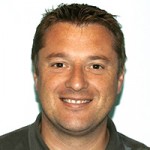
DENEELE Dimitri
Directeur de Recherche Gustave Eiffel
DENEELE Dimitri
Chercheur équipe ID2M
prenom.nom@cnrs-imn.fr / 02 40 37 63 12
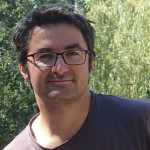
DEVIC Thomas
Directeur de Recherche CNRS
Fonctions :
Directeur de recherche CNRS (section 17)
Expertises :
- Matériaux hybrides organiques-inorganiques
- Chimie de coordination
- Stockage de l’énergie
- Matériaux poreux
- Etudes in situ
- Cristallochimie
- Relations structures-propriétés
Principales thématiques de recherche :
- Synthèse de nouveaux MOFs fonctionnels
- Nouveaux matériaux électroactifs
- Liants et revêtements de coordination pour électrodes de batteries
- Matériaux hybrides et stockage d’énergie thermique.
Projets de recherche en cours :
Comme coordinateur :
ANR PRC CE05, 2024-2027. Thermal management of metal organic framework materials (TEM-MOF). Partenaires : LTeN (X. Py), ICMN (B. Cagnon).
Comme responsable partenaire :
- ANR PRC CE50, 2022-2026. Catalytic sorbent bed for improved production of methanol (SIMPA). Coordinatrice A.C- Roger (ICPEES) ; partenaires IMN (T. Devic), CP2M (P. Fongarland), ICGM (P. Trens).
- ANR PRC CE08, 2025-2029. Novel MOFs for singlet oxygen generation storage and delivery (MOFSONG). Coordinatrice A. Fateeva (LMI) ; partenaires IMN (T. Devic), CEISAM (V. Coeffard), CRMN (G. Pintacuda), LRGP (C. Frochot).
Comme participant :
Laboratoire commun IMN-Blue solutions (IMNBlue), 2023-2027. Batteries tout solide nouvelle génération.
Biographie :
Thomas Devic a obtenu son doctorat en 2003 à l’Université d’Angers. Après un séjour postdoctoral à l’Université Cornell, aux États-Unis, sous la direction de Stephen Lee, il a été recruté au CNRS à l’Institut Lavoisier de Versailles, en France, en 2004, au sein du groupe de recherche « Solides poreux » dirigé par Gérard Férey. En 2016, il a rejoint l’Institut des Matériaux Jean Rouxel, à Nantes, en France, où il est actuellement directeur de recherche au CNRS. Ses recherches portent principalement sur les matériaux hybrides organiques-inorganiques, avec un accent particulier sur la synthèse et la caractérisation structurale. Il s’intéresse au développement de nouveaux composés hybrides (sels, complexes et polymère de coordination, MOFs), en particulier à base de briques organiques non triviales, à l’utilisation d’outils à haut débit pour y parvenir, à leur caractérisation structurelle approfondie à l’aide de diverse techniques d’analyse (DRX, RMN, infrarouge…) et à leurs applications dans divers domaines, tel que la capture de gaz et le stockage d’énergie électrochimique et thermique. Il a encadré plus de 20 doctorants et post-doctorants, et participe à divers projets collaboratifs académiques et industriels.
Enseignement:
Cours et TP sur les polymères de coordination poreux, niveau master (Nantes Université)
Publications :
Nombre de publi : 155
Publi majeures illustratives :
A Fe-thiolate layered metal organic framework as a high-performance electrode material for potassium-ion batteries. L.H.B. Nguyen, P. Salcedo-Abraira, D. Le Thanh, N. Gedikoglu, N. Guillou, R. Coatleven, P. Poizot, F. Salles, N. Louvain, L. Stievano, T. Devic, Chem. Commun. 2025, 61, 9614 - 9617.
Expanding the horizons of porphyrin metal-organic frameworks via catecholate coordination: exploring structural diversity, materials stability and redox properties. S. De, G. Mouchaham, F. Liu, M. Affram, B. Abeykoon, N. Guillou, E. Jeanneau, J.-M. Grenèche, L. Khrouz, C. Martineau-Corcos, L. Boudjema, F. Salles, P. Salcedo-Abraira, G. Valente, M. Souto, A. Fateeva, T. Devic, J. Mater. Chem. A 2023, 11, 25465-25483.
Is there any benefit of coating Si particles for negative electrode material for Li-ion batteries with a MOF? The case of Al fumarate. N. Kana, K. Touidjine, S. Olivier-Archambaud, E. Gkaniatsou, M. Paris, N. Dupré, N. Gautier, P. Moreau, C. Sicard, B. Lestriez, T. Devic, ACS Applied Energy Mater. 2023, 6, 9218-9230.
Coordinatively cross-linked binders for silicon-based electrodes for Li-ion batteries: beneficial impact on mechanical properties and electrochemical performance. L. Huet, D. Mazouzi, P. Moreau, N. Dupré, M. Paris, S. Mittelette, D. Laurencin, T. Devic, L. Roué, B. Lestriez, ACS Applied Mater. Interfaces 2023, 15, 15509–15524.
Deciphering the thermal and electrochemical behaviors of dual redox-active iron croconate violet coordination complexes. M. Denis, J.-M. Grenèche, N. Gautier, P. Poizot, T. Devic, Inorg. Chem. 2022, 61, 9308-9317.
Silicon Electrodes for Li-ion Batteries. Addressing the Challenges through Coordination Chemistry. T. Devic, B. Lestriez, L. Roué, ACS Energy Lett. 2019, 4, 550-557.
Nombre de brevets : 4
Lien vers publi HAL : https://hal.science/search/index?q=thomas+devic
Lien vers orcid : https://orcid.org/my-orcid?orcid=0000-0001-7074-6498
DEVIC Thomas
Chercheur équipe ST2E
prenom.nom@cnrs-imn.fr / 02 40 37 39 35
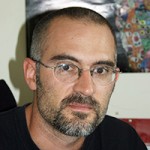
DUPRE Nicolas
Chargé de Recherche CNRS
DUPRE Nicolas
Chercheur équipe ST2E
prenom.nom@cnrs-imn.fr / 02 40 37 63 29

EWELS Chris
Directeur de Recherche CNRS
Fonctions:
- Directeur de Recherche, co-chef d’equipe PMN
- CNRS Research Director
- Joint Group head of the PMN Group
- Visiting Professor, Toyo University, Japan
- Editor Journal « Carbon »
Qualifications:
- PhD Computational Physics, Exeter University (1997)
- Habilitation à diriger la recherche, Nantes University (2011)
Expertises:
Carbon Science, DFT Modelling, Defects, Materials Physics and Chemistry, Science Communication
Major research topics:
- Dislocations and point defects in graphite and 2D carbon Materials
- Fullerene Science (formation, functionalisation, supramolecular structure formation)
- Nanodiamond Modelling
- Functionalisation and topology of novel nanomaterials
- Science Communication tools and techniques (virtual, physical)
Biography:
Chris Ewels graduated from Oxford University in 1993 in “Metallurgy and the Science of Materials”. After a Ph.D. in 1997 from the University of Exeter UK, for computational studies of oxygen defects in silicon, he moved to Sussex University where he worked on radiation induced defects in graphite and carbon nanosystems. At Sussex he joined the Vega Science Trust with Sir Harry Kroto, where he created an online science TV channel and developed a passion for public communication of science. In Paris he worked at the national aerospace research facilities ONERA, and was then a Marie Curie Individual Research Fellow at the Université Paris Sud within the electron microscopy group of Professor Christian Colliex. In 2006 he received the European Marie Curie Excellence Award and in the same year jointed the CNRS at the Institute of Materials in Nantes, becoming Directeur de Recherche in 2015. His work focuses on computer modelling of nanoscale carbons in close collaboration with experimental colleagues. He has authored over 200 journal publications including nine book chapters, and is on the Stanford University list top 2% most cited active scientists. His interest in science communication continues, with Web videos he has commissioned and produced now viewed over 1.5 million times. He is now joint head of the Physics of Materials and Nanostructures group at the IMN, coordinating nanocarbon initiatives at the local, regional, national and European level.
Research projects:
« Current Research Projects (2026) »
- Participant ANR CADENA (« Fluorinated nanodiamonds for catalysis »)
- Coordinator ANR DISLOCARBON (« Dislocations in layered carbon nanomaterials »)
- Core-Group Committee, COST Nanospace (« Carbon molecular nanostructures in space »)
- Regional Project LUMOMAT « RunningRings »
- Regional Project « Trajectoire Nationale »
Teaching:
- M2 E-MAT « Nanocarbon and 2D Materials »
- M2 E-MAT « Machine Learning Approaches »
Distinction:
- European Carbon Association (ECA) Award (2025)
- British Carbon Group Ubbelohde Award Lecture for Carbon Science (2014)
- European Union Marie Curie Excellence Award (2006)
- Fonds International Wernaers award pour diffusion des connaissances (2008)
- CineGlobe Public Award for best science documentary (2010)
Publications:
- 1. ‘CO adsorption on pure, defective and mixed composition AlF3 and MgF2 surfaces’
A. Impellizzeri, J. Dieu, J. Rousseau, S. Brunet, C. P. Ewels*
Catal. Sci. Technol. 14, 3021-3028 (2024) - 2. ‘Electronic States of Carbon Materials’
S. Latil, C. Ewels* (1st Edition: P. Lambin, J. Fink)
Encyclopedia of Condensed Matter Physics, 2nd Edition, Elsevier, Vol. 5, 702-715 (2024) - 3. ‘Noncontact Layer Stabilization of Azafullerene Radicals: Route toward High-Spin-Density Surfaces’
Y. Tanuma, G. Kladnik, L. Schio, M. van Midden Mavrič, B. Anezo, E. Zupanic, G. Bavdek, R. Canton-Vitoria, L. Floreano, N. Tagmatarchis, H. A. Wegner, A. Morgante, C. P. Ewels*, D. Cvetko*, D. Arčon*, ACS Nano 17, 24, 25301-25310 (2023) - 4. ‘Prismatic Edge Dislocations in Graphite’
J. G. McHugh*, P. Mouratidis, A. Impellizzeri, K. Jolley, D. Erbahar, C. P. Ewels*
Carbon, 188, 401-419 (2022) - 5. Direct Observation and Catalytic Role of Mediator Atom in 2D Materials’
G.-D. Lee*, A. W. Robertson*, S. Lee, Y.-C. Lin, J.-W. Oh, H. Park, Y.-C. Joo, E. Yoon, K. Suenaga, J. H. Warner, C. P. Ewels*, Science Advances, 6 (24), eaba4942 (2020)
Link orcid : 0000-0001-5530-9601
https://www.linkedin.com/in/ewels/
Contact:
Dr Chris Ewels
Institut des Matériaux de Nantes Jean Rouxel (IMN)
2 Chemin de la Houssinière
44322 Nantes
FRANCE
+33-240 37 64 07
chris.ewels \@ cnrs-imn.fr
EWELS Chris
Chercheur - Co-responsable équipe PMN
prenom.nom@cnrs-imn.fr / 02 40 37 64 07
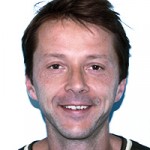
GAUBICHER Joel
Directeur de Recherche CNRS
GAUBICHER Joel
Chercheur équipe ST2E
prenom.nom@cnrs-imn.fr / 02 40 37 63 22
GAUTIER Romain
Chargé de Recherche CNRS
Fonctions actuelles - Currently:
Since 2013: CNRS Research Scientist
Fonctions precedents / Before:
- 2010-2013: Postdoctoral Fellow / Northwestern University (USA)
- 2007-2010: PhD / University of Rennes (France)
Ressources en ligne - Online ressources:
- ResearcherID : E-2532-2012
- ResearchGate : https://www.researchgate.net/profile/Romain_Gautier2
- Google Scholar : https://scholar.google.fr/citations?user=BiIoyN0AAAAJ&hl=en
GAUTIER Romain
Chercheur équipe MIOPS
prenom.nom@cnrs-imn.fr / 02 40 37 63 34
GRANIER Agnès
Directrice de Recherche
Fonctions :
Directrice de recherche CNRS (DR1) à l’IMN (80%) et Déléguée scientifique » plasmas » à CNRS Ingénierie (20%)
Expertises :
Procédés plasmas froids basse pression, dépôt de couches minces par PECVD à partir de précurseurs organométalliques, diagnostics des plasmas (OES, sonde de Langmuir, spectrométrie de masse).
Principales thématiques de recherche :
- dépôt de couches minces à propriétés diélectriques, optiques, photocatalytiques, barrière (SiO2, SiOCH, TiO2) par dépôt chimique en phase vapeur assisté par plasma (PECVD)
- dépôt de couches minces nanocomposites multifonctionnelles par injection de solutions colloidales dans un plasma basse pression (TiO2:SiO2, ZnO:SiO2…)
- étude des mécanismes d’interactions plasma/surface
- étude globale des procédés plasmas de synthèse de nanomatériaux et dépôt de couches minces
Projets de recherche en cours :
- Dépôt de couches minces nanocomposites en plasma brumeux, par procédé hybride : injection d’une solution colloidale dans un plasma basse pression.
- Couches minces nanocomposites formées de nanoparticules d’oxyde de fer dans une matrice de TiO2 (en collaboration avec UdM, Montréal)
- Couches minces nanocomposites formées de nanoparticules de TiO2 dans une matrice de SiO2, propriétés diélectriques (projet ANR ADN, 2025-2028)
Activités dans la communauté de recherche :
- Membre du CA de la Société Française du Vide
- Membre du réseau Plasmas Froids et du GDR EMILI
Biographie
- 2013-2021 : Directrice adjointe de l’IMN
- 2017-2020 : Membre du Comité d’évaluation CE08 de l’Agence Nationale de la Recherche
- 2012-2016 : Membre nommée du Comité National de la Recherche Scientifique, section10
- 2005-2012 : Responsable de l’équipe Plasmas et Couches Minces de l’IMN (25-30 personnes)
- 2012-2015 : Membre du Conseil de l’Ecole Doctorale 3MPL (Molécules, Matières et Matériaux en Pays de Loire)
- 2008-2011 : Membre du Comité d’évaluation de l’ANR non thématique (CSD2 puis SIMI9)
- 2004-2006 : Animatrice du Réseau Plasmas Froids de la MRCT (CNRS) (400 membres)
- 2001-2003 : Chargée de mission au Département SPI (Sciences pour l’Ingénieur) du CNRS
- 1998-2005 : Responsable de l’équipe PECVD du Laboratoire Plasmas Couches Minces de l’IMN
- 1994-1997 : Directrice du GDR « Procédés de dépôt de couches minces à partir de plasmas d’organosiliciés«
- 1986-1992 : Chargée de recherche (CR2 de 1986 à 1990, puis CR1) au Laboratoire de Physique des Gaz et des Plasmas (Orsay)
GRANIER Agnès
Chercheure équipe PCM
prenom.nom@cnrs-imn.fr / 02 40 37 39 65
JANOD Etienne
Directeur de Recherche CNRS
JANOD Etienne
Chercheur équipe PMN
prenom.nom@cnrs-imn.fr / 02 40 37 39 37
JOBIC Stéphane
Directeur de Recherche CNRS
JOBIC Stéphane
Directeur-Adjoint IMN - Chercheur équipe MIOPS
prenom.nom@cnrs-imn.fr / 02 40 37 39 22