

Physics of Materials and Nanostructures (PMN)
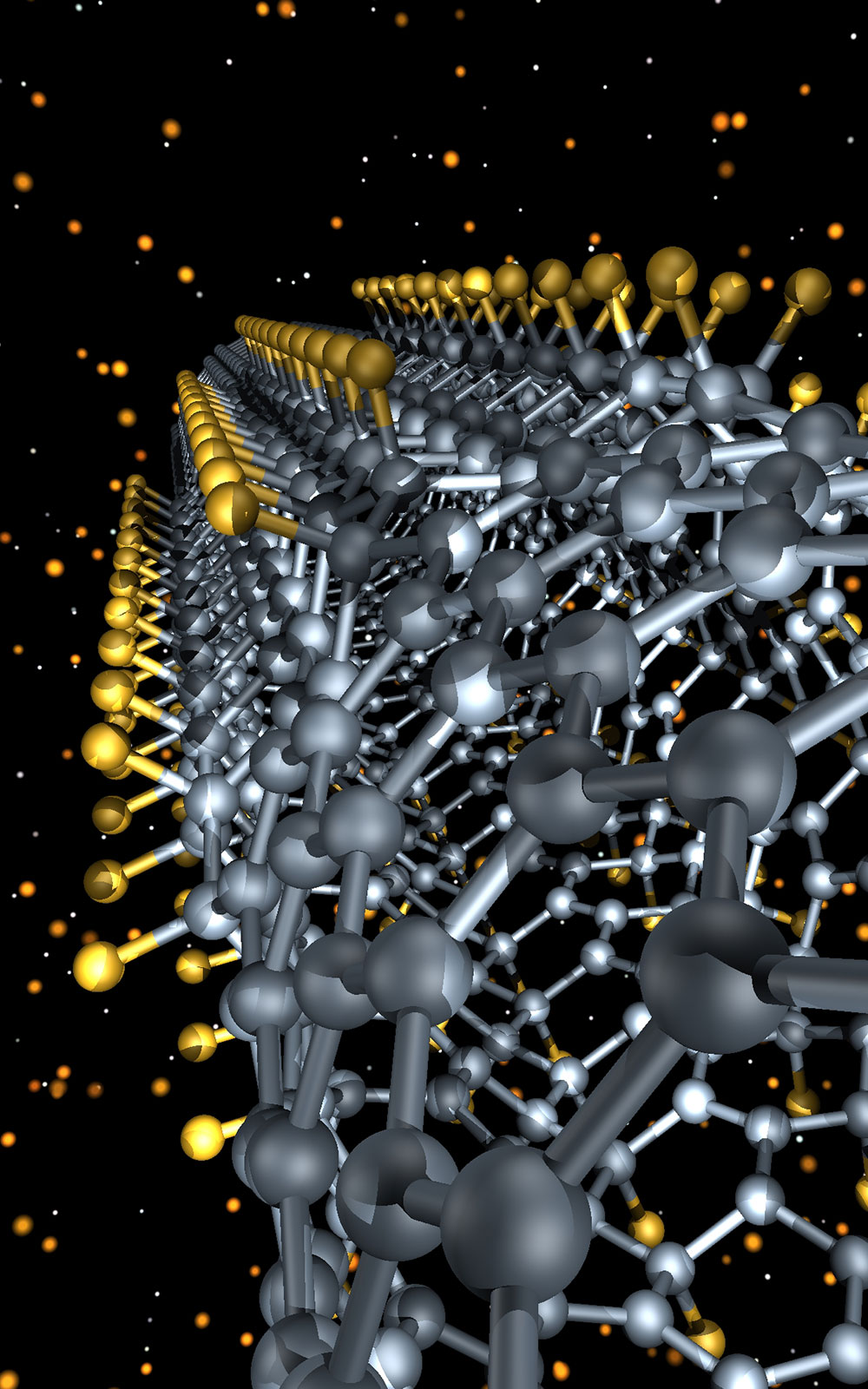
The Physics of Materials and Nanostructures (PMN) team brings together materials physicists and chemists, combining their expertise to explore matter at the nanoscale. We develop complementary experimental and theoretical approaches, from the synthesis and manipulation of new materials to advanced modeling of their properties. Our approach is based on strong interaction between design, characterization and fundamental understanding, with a particular focus on methodological innovation. The team’s research is organized around three themes.
Areas of expertise and tools
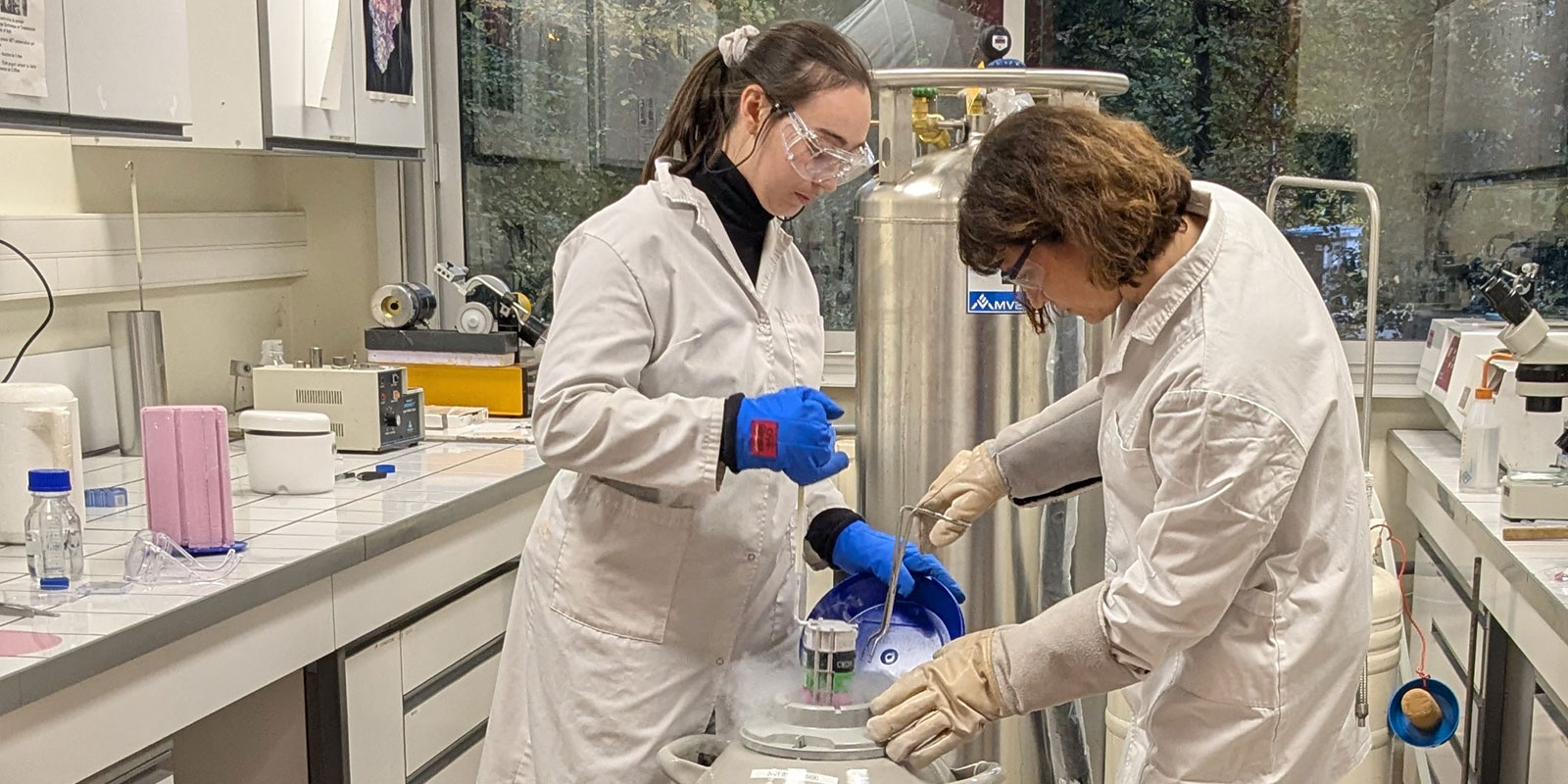
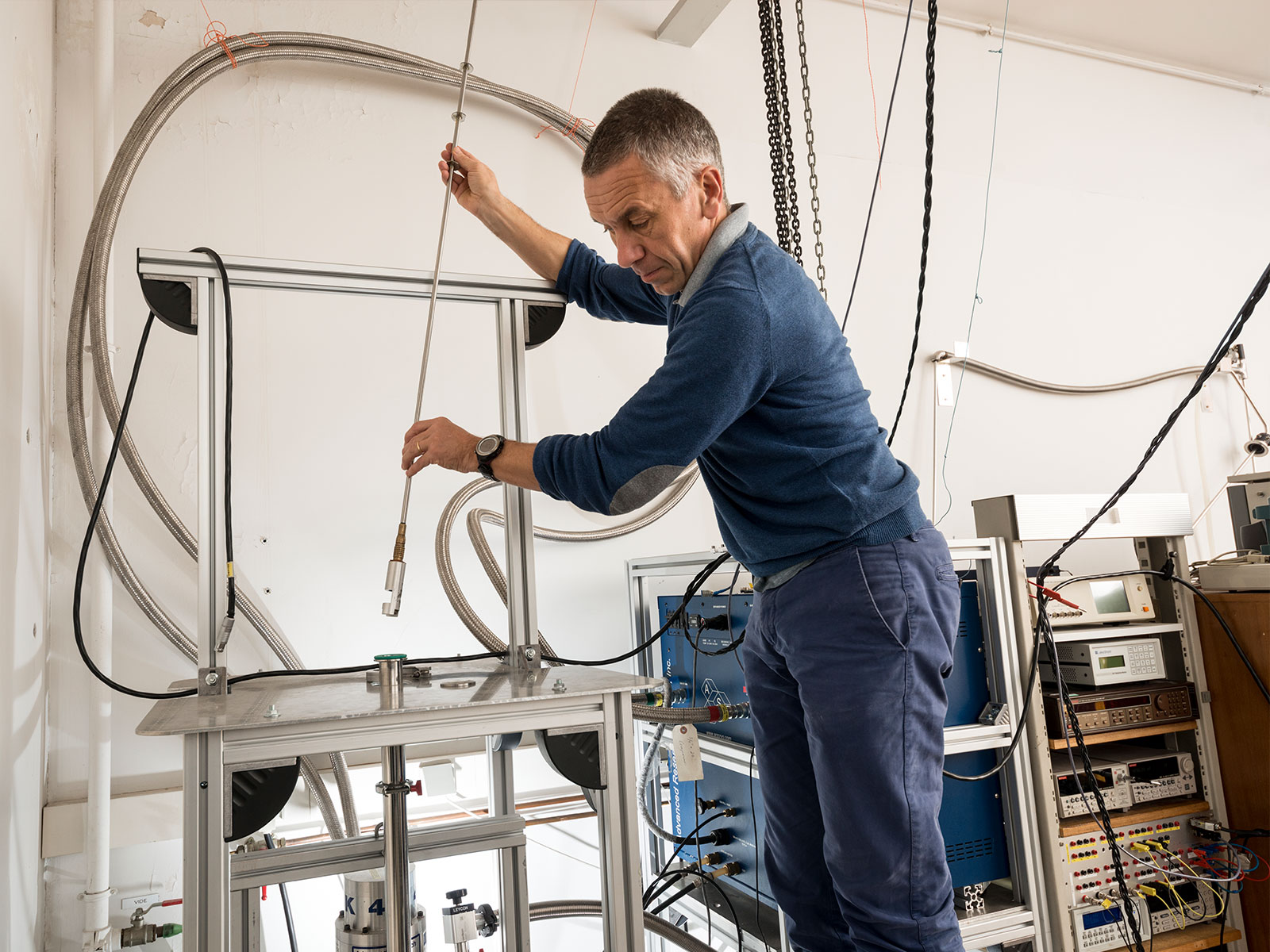
The team’s themes are based on a set of original and specific skills and techniques covering :
- Optical and vibrational spectroscopy (Raman scattering, IR absorption, transient absorption spectroscopy TAS),
- Atomic force microscopy (AFM) and other near-field microscopies,
- Electron microscopy and spectroscopy, EELS, EDX,
- Atomic modeling and simulation of physical properties (DFT, DFTB+, MD, in-house codes),
- Electrical transport and magnetotransport measurements,
- Physical chemistry of confined environments and interfaces,
- Nanostructure characterization (zeta potential, DLS),
- Specific synthesis (e.g. topotactic, plasma, sol-gel).
Average figures
0
Permanent staff
0
Non-permanent staff
0
Publications/6 years
0
Patents / 6 years
0
Current contracts
0
Conferences / year
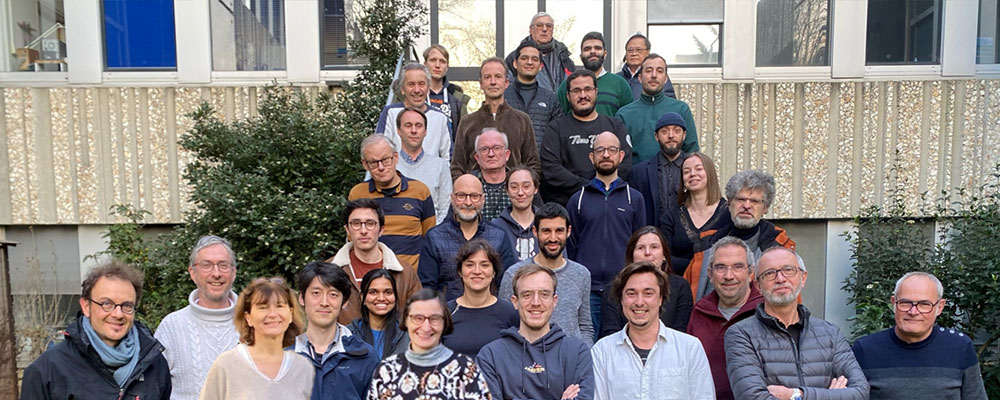
Permanent staff
- ABELLAN Patricia (Researcher)
- BAYLE Maxime (Ens.-Researcher)
- BERTONCINI Patricia (Ens.-Researcher)
- CARIO Laurent (Researcher)
- CHAUVET Olivier (Ens.-Researcher)
- CLAVEAU Yann (Ens.-Researcher)
- CORRAZE Benoît (Ens.-Researcher)
- CUENOT Stéphane (Ens.-Researcher)
- DUVAIL Jean-Luc (Research Associate)
- EWELS Chris (Researcher)
- HUMBERT Bernard (Ens.-Researcher)
- JANOD Etienne (Researcher)
- LE BIDEAU Jean (Ens.-Researcher)
- MOKRANI Arezki (Ens.-Researcher)
- PAWULA Florent (Research Professor)
- QUILLARD Sophie (Ens.-Researcher)
- SASAKI Shunsuke (Researcher)
- TERRISSE Hélène (Ens.-Researcher)
- TRANCHANT Julien (Engineer)
- VANDENBORRE Johan (Researcher)
Non-permanent
- ANEZO Bastien (PhD student)
- BLOND, Nathanael (Research Assistant, Fixed-Term Contract)
- BRABECH Lahcen (PhD student)
- CORDIEZ Justine (Engineer)
- DELENDA Anouar-Akacha (PhD student)
- DE SALVO Giuseppe (Post-Doc)
- DONTOT Léo (Post-Doc)
- ECHATE Hajar (PhD student)
- GUZMAN-BRAMBILA Julio C. (Post-Doc)
- HAYDOURA Mohamad (Post-Doc)
- JOYEAU Marie (PhD student)
- KOTRONIA Antonia (Post-Doc)
- LAGREVE Dorian (PhD student)
- MRABATI Henda (Doctoral student)
- PAPALETSIOU Alexandra (PhD student)
- PHILIPPE Morgane (PhD student)
- RENARD Ines (PhD student)
- SIRJITA Eduard-Nicolae (PhD student)
- TROGER Karl (PhD student)