

A step towards longer-lasting organic batteries
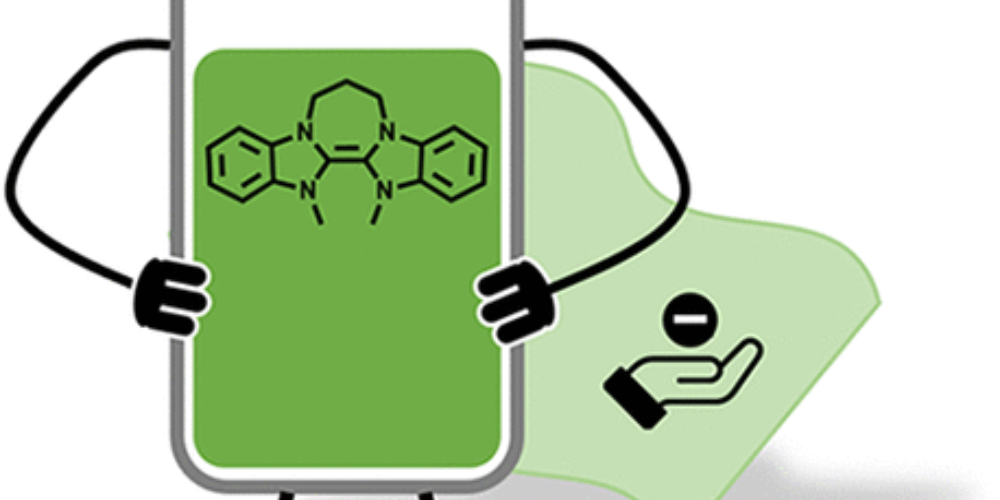
A step towards more sustainable organic batteries: Franco-German collaboration honoured by ACS Publication
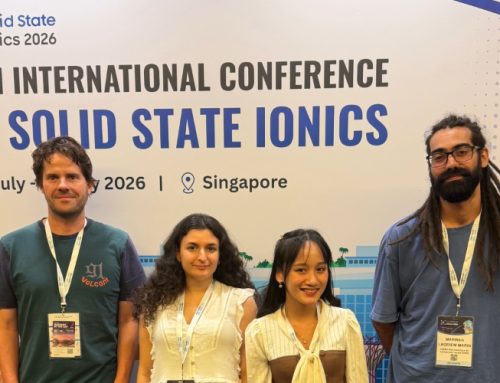
A team of French and German researchers from our institute and theUniversity of Ulm (Germany) has just published an innovative study on organic batteries. Their paper, which was selected as ACS Editors’ Choice, proposes a promising alternative to the metallic materials used in conventional batteries.
Metal-free batteries: an ecological and economic challenge
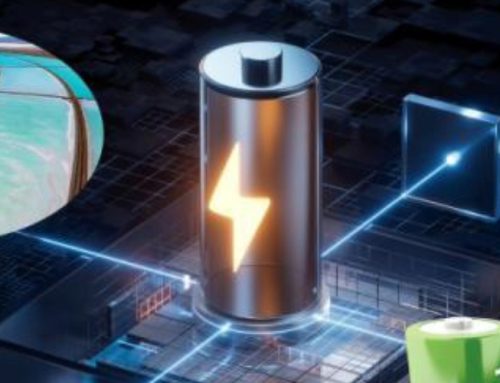
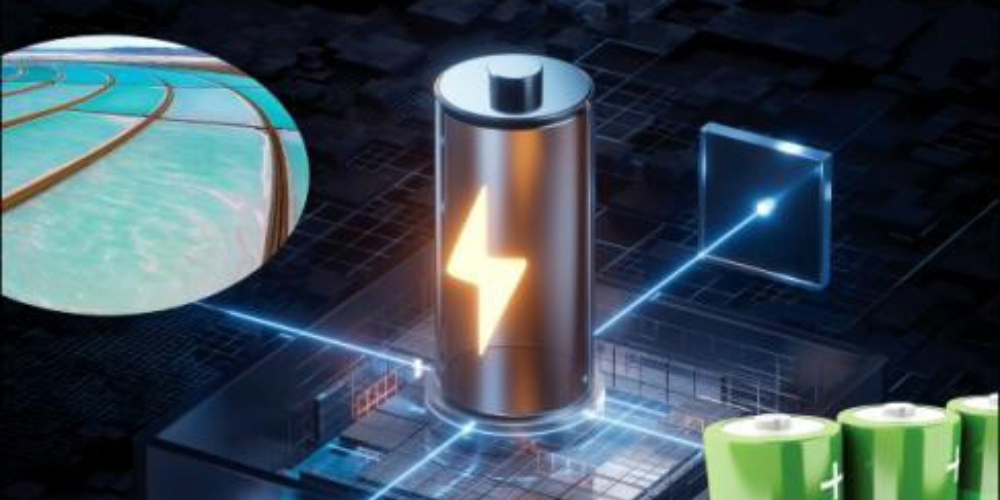
Today, most batteries use metals, which are often rare and expensive. Researchers are exploring an alternative: organic materials (based on hydrogen, carbon, oxygen and nitrogen), for the development of purely molecular batteries, which are cheaper and more environmentally friendly. The teachers-researchers focused on a family of molecules known as “super electron donors” (SEDs). These molecules, capable of easily releasing electrons, have been integrated into polymers (molecular chains) to create negative electrodes for such organic batteries.
Next steps
Although the polymers tested (PSBBI and X-PSBBI) demonstrated their ability to store and release energy reversibly, their performance diminished after several cycles. The researchers propose a possible explanation for this phenomenon: the formation of a reactive chemical species (a “dicarbene”), which would damage the material. These results will guide future research into the design of more stable, high-performance organic materials.
International collaboration
The article, entitled “Bi(benzimidazole)-Based Super Electron Donors as p-Type Organic Electrode Materials for Anionic Redox in Lithium-Ion Batteries”, is the fruit of collaboration between the groups of Professors Birgit Esser (Institute of Organic Chemistry II and Advanced Materials, Ulm University, Germany) and Philippe Poizot(ST2E team).
The article is available in open access for six months: https: //pubs.acs.org/doi/10.1021/acsapm.6c00515
The article was highlighted by Nantes Université: https: //u-news.univ-nantes.fr/une-avancee-vers-des-batteries-organiques-plus-durables
Share this article
Other articles