

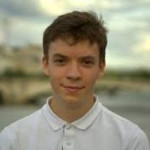
RAQUIN Arthur
Doctorant équipe ID2M
prenom.nom@cnrs-imn.fr
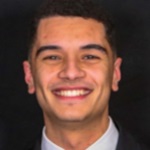
RASSANE Anas
Doctorant équipe ID2M
prenom.nom@cnrs-imn.fr
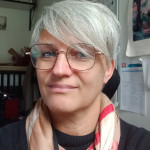
RAUTURIER Magalie
Service administratif
prenom.nom@cnrs-imn.fr / 02 40 37 39 08
REMMOUCHE Nadjib
Ingénieur CDD Spectroscopie PLASSMAT
prenom.nom@cnrs-imn.fr / 02 40 37 64 09
RENARD Inès
Doctorante équipe PMN
prenom.nom@cnrs-imn.fr
RENAULT Stéven
Maître de Conférences
RENAULT Stéven
Enseignant-chercheur équipe ST2E
prenom.nom@cnrs-imn.fr / 02 40 37 39 49
RENTY Valérie
Service administratif
prenom.nom@cnrs-imn.fr / 02 40 37 39 54
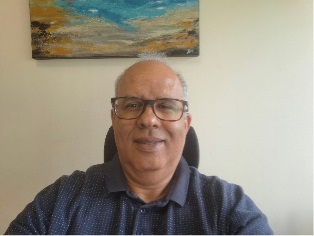
RHALLABI Ahmed
Professeur des Universités
Fonction :
Professeur des universités 1ère classe, 63ème section CNU
Expertises :
- Expert dans le domaine de la modélisation des procédés plasmas froids pour le dépôt et la gravure des couches minces.
- Expert dans le domaine de la physique des semi-conducteurs et de la microélectronique.
- Expert dans le domaine des méthodes numériques pour la physique.
Principale thématique de recherche :
Modélisation des phénomènes d’interactions plasmas surfaces pour la gravure et le dépôt des couches minces : développement d’approches multi-échelles
Projets de recherche en cours :
- Approche multi-échelle pour la modélisation de la gravure de GaN par le procédé Atomic Layer Etching (ALE) en collaboration avec ST Microelectronics.
- Modélisation multi-échelle du plasma en pulvérisation magnétron à impulsions de haute puissance (HiPIMS)
- Modélisation et conception d’un capteur intelligent de gaz à base d’oxydes de métaux déposés par procédé PVD
Activités dans la communauté de recherche :
- Responsable adjoint de l’équipe Plasmas et Couches Minces.
- Membre élu du conseil scientifique de l’IMN
- Membre élu du conseil scientifique de l’UFR Sciences
- Membre du conseil de département de physique
Biographie :
Je suis titulaire d’un DEA en Instrumentation et Mesures, obtenu en 1988 à l’Université Joseph Fourier de Grenoble. En 1992, j’ai soutenu une thèse de doctorat en Sciences des Matériaux, spécialité microélectronique, à l’Université de Nantes. En 1993, j’ai été nommé Maître de conférences à l’IRESTE (aujourd’hui Polytech Nantes), puis promu Professeur des Universités en 2007 au sein du département de physique de la Faculté des Sciences et Techniques de Nantes Université. J’assure actuellement la responsabilité du Master Electronique, Énergie Électrique, Automatique (EEA). Mes enseignements couvrent plusieurs domaines clés : l’électronique analogique, les semi-conducteurs, la microélectronique, la nanoélectronique, la modélisation numérique, ainsi que les procédés de fabrication des circuits intégrés.
Sur le plan de la recherche, je suis rattaché à l’Institut des Matériaux de Nantes Jean Rouxel (IMN) depuis 1989. J’y exerce les fonctions de responsable adjoint de l’équipe Plasmas et Couches Minces (PCM). Avec mes doctorants, nous avons développé des modèles et algorithmes innovants pour la modélisation des décharges plasmas et de leurs interactions avec les surfaces gravées. Ces travaux incluent notamment la méthode globale pour la description de la cinétique des plasmas, ainsi que la méthode cellulaire Monte-Carlo permettant de simuler les interactions plasma-surface dans les procédés de gravure à l’échelle micro- et nanométrique. Cet ensemble de codes a permis de structurer une approche multi-échelle innovante pour la gravure des matériaux aux échelles micronique, nanométrique et atomique.
Enseignement :
- Enseignements sous forme de cours de TD et TP autour de la physique des semiconducteurs, de l’électronique analogique, de la microélectronique, des technologies de fabrication des circuits intégrés, de la CAO et CTAO électronique et de la modélisation physique.
- Responsable du Master mention EEA (1 parcours commun Master1 et 3 spécialités en Master2)
- Responsable du parcours M2 Capteurs Intelligents et qualité des Systèmes Electroniques
- Des cours à l’étranger
- Mise à la disposition des étudiants des enregistrements vidéos de cours
- Encadrement de 18 TER M1 Electronique (2 mois par TER) (2007-2016)
- Encadrement de 21 projets pédagogiques en M2 CEO et M2 CISE (3 mois par projets) (10 depuis 2017)
- Mise en place de plusieurs projets pédagogiques (Exemple : station météo autonome installée au campus de l’UFR Sciences et développement d’une calèche électrique à partir de deux vélos récupérés dans une approche écoconception (en cours).
Publications :
- 61 revues internationales avec comité de lecture
- 103 conférences internationales
- 42 conférences nationales
- 16 conférences invitées
- 12 séminaires en France et à l’étranger
- 20 rapports de contrats
- 1 chapitre d’ouvrage
Publications majeures illustratives :
- T.Rasoanarivo, C.Mannequin, F.Roqueta, M.Boufnichel, and A. Rhallabi,Dynamic global model of Cl2/Ar plasmas: applicability to Atomic Layer Etching processes, J. Vac. Sci. Technol. A 42, 063003 (2024).
- G. Le Dain, A. Rhallabi, C. Cardinaud, A. Girard, M.C. Fernandez, M. Boufnichel, F. Roqueta, Modeling of silicon etching using Bosch process : Effects of oxygen addition on the plasma and surface properties, J. Vac. Sci. Technol. A36, 03E109 1-11 (2018).
- J. Zgheib, P-Y. Jouan, A. Rhallabi, High Power Impulse Magnetron Sputtering global model for argon plasma chromium target interactions, J. Vac. Sci. Technol. A 39, 043004 (2021).
- M. Cosson, B. David, L. Arzel, P. Poizot, A. Rhallabi, Modelling of electrochemical storage and photovoltaic production in an autonomous solar drone, eScience, 2, 235-241 (2022).
- Réalisation d’un simulateur de gravure profonde de silicium par procédé Bosch avec une interface conviviale
Lien vers orcid : https://orcid.org/0000-0003-0855-9995
Lien LinkedIn : https://www.linkedin.com/in/ahmed-rhallabi-8562992a/
RHALLABI Ahmed
Enseignant-chercheur - Responsable-Adjoint équipe PCM
prenom.nom@cnrs-imn.fr / 02 40 37 39 84
RICHARD-PLOUET Mireille
Directrice de Recherche CNRS
Fonctions :
- Since 2019: Head of PCM group
- Since 2018: Directrice de recherche CNRS at the Institut des Matériaux de Nantes Jean Rouxel, in the Plasma and Thin films group, PCM
- 2017-2018: Chargé de recherche CNRS at the Institut des Matériaux Jean Rouxel, in Nantes in the Plasma and Thin films group, PCM
- 2003-2017: Chargé de recherche CNRS at the Institut des Matériaux Jean Rouxel, in Nantes in the CESES group
- 1995-2002: Chargé de recherché CNRS at the Institut de Physique et Chimie des Matériaux de Strasbourg, in the Groupe des Matériaux Inorganiques
- 1994-1995: Post-doctoral researcher at the Laboratoire de Recherche sur les tissus calcifiés. « Caractérisation de matériaux de substitution osseux, avant et après implantation chez l’animal, par diffraction électronique et microscopie électronique à transmission »
Qualifications :
- 2011: habilitation à diriger des recherches
- 1994: PhD university of Nantes, “Synthèse, caractérisation et échange acido-basique de perovskites feuilletées: A2Ln2Ti3O10 (A=Na, K, Ln=Y, La, Nd). » Supervised by Dr Luc Brohan at the Institut des Matériaux de Nantes.
Expertises :
- Synthesis of thin films coupling chemistry in solution and Plasma Enhanced Chemical Vapour Deposition
- Characterisations of nanostructured solids and thin films by XPS, vibrational spectroscopies, X-Rays diffraction, Transmission Electron Microscopy
Principales thématiques de recherche :
- Nanocomposite thin films by coupling chemistry in solution and Plasma Enhanced Chemical Vapour Deposition
- Transition metal oxides by chimie douce (soft chemistry) and plasma for photo-induced applications, opto-electronic applications
Projets de recherche en cours :
Involved in 2 to 3 projects per year as partner or responsible
Activités dans la communauté de recherche :
- Co- and supervision of 25 doctors since 1998
- Involvement in ANR (National Agency of Research) projects with industrial partnership
- Since 2020: Member of the scientific committee of the Research Federation FR 2050 Photoelectron spectroscopy
- Member of the scientific committee of the Group of Research, GDR HPero (2017-2022)
- Member of the Committee for Electron Spectroscopies representing the Nord-West part of France since 2016
- Since 2022, member of the steering committee of the French-Canadian International Research Network dedicated to Controlled Multifunctional Nanomaterials
- Member of the local committee in Nantes, at the Ecole Doctorale ED3PML, the ED3M and finally ED 3 MG, including pre-examination for the Habilitation à Diriger des Recherches since 2015
Biographie :
Mireille Richard-Plouet is a French researcher in the field of inorganic materials and nanomaterials. She obtained her PhD from the University of Nantes in 1994, with a thesis on the synthesis and characterization of layered perovskites, under the supervision of Dr Luc Brohan. After a post-doctoral position, at the Laboratoire de Recherche sur les Tissus Calcifiés (1994-1995), she joined the CNRS as a full-time researcher at the Institut de Physique et Chimie des Matériaux de Strasbourg (1995-2002), where she studied low-dimensional magnetic materials and developed sol-gel and hydrothermal syntheses. In 2003, she joined the Institut des Matériaux Jean Rouxel (IMN) in Nantes, where she was promoted to research director in 2018 and took over as head of the « Plasma and Thin Films » group in 2019. Her work focuses on nanocomposite thin films, transition metal oxides for optoelectronic applications, and advanced characterization of nanostructured solids using techniques such as XPS spectroscopy, X-ray diffraction and transmission electron microscopy.
Winner of the CNRS Bronze Medal in 2000, she has supervised over 20 PhD students since 1998 and published 113 scientific papers.
Involved in the scientific community, she plays an active part in national and industrial research projects, and sits on several scientific committees, including that of the FR 2050 research federation on photoemission spectroscopy, and the steering committee of the Franco-Canadian research network dedicated to Controlled Multifunctional Nanomaterials.
More details:
RICHARD-PLOUET Mireille
Chercheure - Responsable équipe PCM
prenom.nom@cnrs-imn.fr / 02 40 37 39 56

ROCHETEAU Alexia
Doctorante équipe MIOPS
prenom.nom@cnrs-imn.fr
SALAUN Eric
Pôle mécanique
prenom.nom@cnrs-imn.fr / 02 40 68 32 45
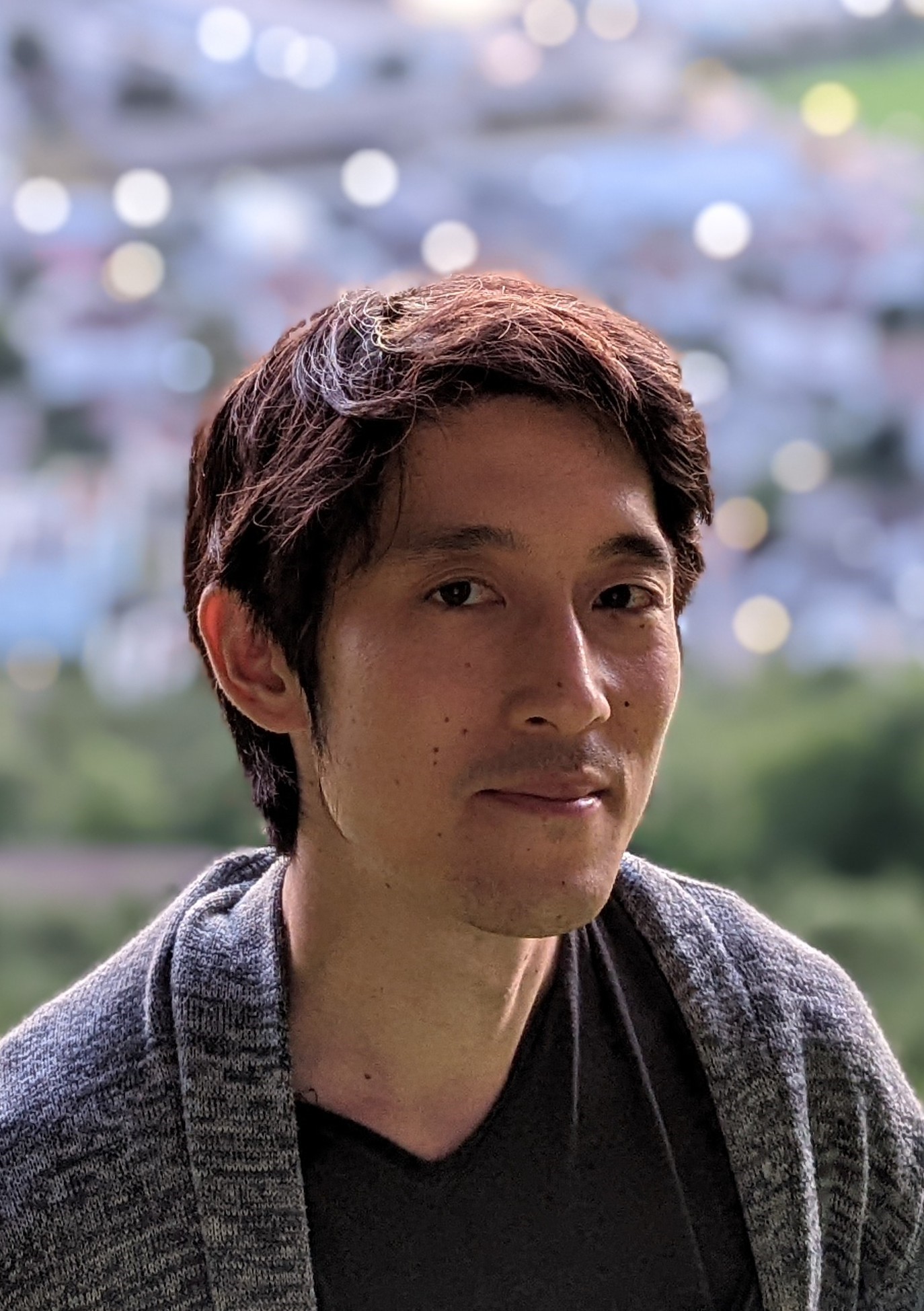
SASAKI Shunsuke
Chargé de Recherche CNRS
Position:
CNRS researcher
Qualifications:
- March 2017 Doctor of Engineering - Tokyo Institute of Technology
- Department of Chemical Science and Engineering, Tokyo, Japan
- “Molecular-Geometry Approaches to Develop Functional Fluorophores Based on Classic Aromatic Hydrocarbons” Supervisor: Gen-ichi Konishi
Previous positions:
- Apr. 2020 – Dec. 2021 Postdoctoral Research Associate, University of Oxford
Inorganic Chemistry laboratory, Oxford, United Kingdom
The project funded by EPSRC (UK) on “Soft chemical control to achieve new layered architectures and strongly correlated states”
Supervisor: Simon J. Clarke
- May 2017 – Mar. 2020 JSPS Postdoctoral Fellow, Nantes Université
Institut des Matériaux Jean Rouxel (IMN), Nantes, France
The project funded by JSPS (Japan) on “Rational design and study of layered transition metal chalcogenides with various local geometry obtained by a novel topotactic intercalation concept”
Supervisor: Laurent Cario
Main research topics:
Design & synthesis of chalcogenides, mixed-anion compounds, low-dimensional materials, quantum materials, π-conjugated systems, fluorescent dyes
Biography
Shunsuke Sasaki currently works at the Jean Rouxel Materials Institute in Nantes (IMN) as a permanent researcher affiliated to the French National Centre for Scientific Research (CNRS). He earned his bachelor’s degree in polymer chemistry from the Tokyo Institute of Technology in 2014. He continued his studies in organic and polymeric materials at the same institute and completed his Ph.D. research on the design of fluorescent molecules in 2017, under the supervision of Dr. Gen-ichi Konishi. Afterward, he decided to shift his focus to inorganic solid-state chemistry and worked as a JSPS postdoctoral fellow at Nantes University under the guidance of Dr. Laurent Cario and his co-workers at IMN until 2020. He conducted another postdoctoral research at the University of Oxford with Dr. Simon J. Clarke before being recruited by CNRS in 2022. His current research focuses on developing novel low-temperature reactions that enable the tailored design of inorganic solid-state materials with exotic 2D structures.
Ongoing research projects:
French National Research Agency (ANR) project - COBEDIT
“Covalent-bond editing by topochemistry of chalcogenide materials” Role: Coordinator
Activities in the research community
International Core-to-core/ASPIRE network on mixed-anion compounds involving France (IMN, ICMCB, UCCS, ISCR), Japan (Kyoto University), UK (University of Oxford), Belgium (University of Antwerp) and Germany (RWTH Aachen).
Prizes:
2024 J. Mater Chem B Outstanding peer reviewers, Royal society of chemistry.
2023 Rising Stars in Organic and Inorganic Chemistry 2023, American Chemical Society
Main publications:
- Anionic Redox Topochemistry for Materials Design: Chalcogenides and Beyond.
ACS Org. Inorg. Au 4, 26-40 (2024). - Anion Redox as a Means to Derive Layered Manganese Oxychalcogenides with Exotic Intergrowth Structures.
Nat. Commun. 14, 2917 (2023). - Design of Metastable Oxychalcogenide Phases by Topochemical (de)intercalation of Sulfur in La2O2S2.
Nat. Commun. 12, 3605 (2021). - Principles of Aggregation‐Induced Emission: Design of Deactivation Pathways for Advanced AIEgens and Applications.
Angew. Chem. Int. Ed. 59, 9856-9867 (2020).
Orcid link: https://orcid.org/0000-0001-8358-1629
Scholar.google.fr link: https://scholar.google.fr/citations?user=gPGubGsAAAAJ&hl=en
SASAKI Shunsuke
Chercheur équipe PMN
prenom.nom@cnrs-imn.fr / 02 40 37 39 80
SEIGNEUR Léo
Fonction :
Doctorant
Principales thématiques de recherche :
Dépôt PVD, procédés HiPIMS et e-HIPIMS, couches minces, micro-supercondensateurs
Projet de recherche en cours :
Doctorat portant sur le dépôt d’électrodes en couches minces par pulvérisation magnétron en régime d’impulsions de haute puissance (HiPIMS) pour la réalisation de micro-supercondensateurs 3D
Activités dans la communauté de recherche :
Secrétaire de l’association de doctorants SYRA de l’IMN
Biographie :
Titulaire d’un Master en Matériaux Innovants et Systèmes Énergétiques, j’ai réalisé mon stage de fin d’études chez STMicroelectronics à Tours, où j’ai travaillé sur l’optimisation d’un procédé de gravure pour des capacités TaN/SiN/TaN. Actuellement doctorant à l’Institut des Matériaux Jean Rouxel au sein de l’équipe PCM, mes travaux portent sur le développement d’électrodes pour micro-supercondensateurs 3D, à l’aide des techniques de dépôt par pulvérisation cathodique impulsionnelle à haute puissance (HiPIMS) et sa variante enrichie l’e-HiPIMS. L’objectif de cette thèse est d’optimiser la structuration, la conformité et les performances électrochimiques des électrodes (TiN, VN/VOxNy) sur substrats 3D pour répondre aux besoins en stockage d’énergie à haute densité dans les systèmes miniaturisés.
Lien vers orcid : https://orcid.org/0009-0004-5564-3959
Lien LinkedIn : https://www.linkedin.com/in/l%C3%A9o-seigneur-32525a223/
SEIGNEUR Léo
Doctorant équipe PCM
prenom.nom@cnrs-imn.fr

SIRJITA Eduard-Nicolae
Chercheur CDD équipe PMN
prenom.nom@cnrs-imn.fr / 02 40 37 39 86
SOUDAN Patrick
Ingénieur équipe ST2E
prenom.nom@cnrs-imn.fr / 02 40 37 39 30
STAMENKOVIC Branimir
Chercheur CDD équipe ST2E
prenom.nom@cnrs-imn.fr

STEPHANT Nicolas
Ingénieur MEB PLASSMAT
prenom.nom@cnrs-imn.fr / 02 30 37 64 26
SUCGANG Ana
Doctorante équipe ST2E
prenom.nom@cnrs-imn.fr