

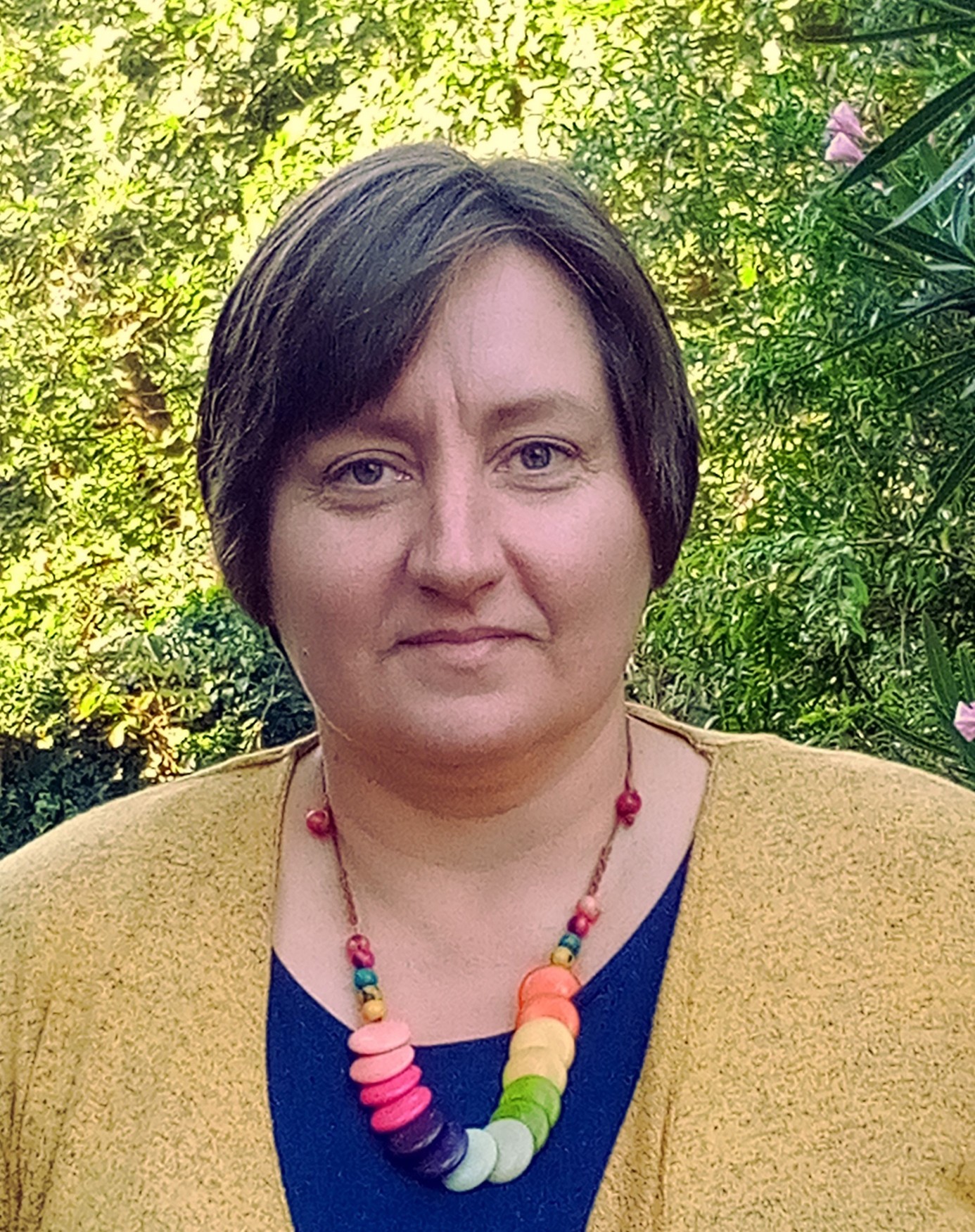
BRAEMS-ABBASPOUR Isabelle
Chargée de Recherche CNRS
Fonctions :
CNRS Researcher
Qualifications :
PhD, HDR
Expertises :
- chimie computationnelle des matériaux,
- prédiction de structures cristallines,
- thermodynamique numérique,
- calcul garanti,
- IA,
- calculs de structure électronique (DFT),
- outils de physique statistique (Monte Carlo, Dynamique Moléculaire)
Principales thématiques de recherche :
- Prédiction de structures cristallines de nouveaux matériaux (CSP)
- Développement de logiciel garanti de calcul de diagrammes de phases (CALIPH) : coll. A. Goldsztejn, C. Jermann, T. Gouhier, LS2N Nantes
Projets de recherche en cours :
- Prédiction de structures cristallines pour soutien aux chimistes expérimentateurs : (oxy)sulfures, nitrures, chlorures, (oxy)chalcogénures
- Description thermodynamique de mécanismes en compétition lors de réactions topochimiques
- Recherche et caractérisation de nouveaux matériaux pour des revêtements anti-corrosion en collaboration avec Safran
- Développement de bases de données structures-diagrammes de phases pour les matériaux chlorés utiles dans les réacteurs à sels fondus
- Développement logiciel CALIPH (financement OPEN – CNRS Innovation)
Enseignement :
- Module AI for materials discovery and design (EMat Graduate Program, Nantes Université) : responsible + teaching hours
- Chimie quantique et liaison chimique (Polytech’Nantes, Nantes Université)
- Diffusion de la matière (Polytech’Nantes, Nantes Université)
Brevets :
1 dépôt APP, 1 étude de brevetabilité en cours
Lien vers publi HAL : https://cv.hal.science/isabelle-braems
Lien vers Orcid : 0000-0003-2374-4259
Lien vers Researchgate : https://www.researchgate.net/profile/Isabelle-Braems?ev=hdr_xprf)
Lien vers des pages dédiées : 1 CSP, CALIPH= https://saas.ls2n.fr/caliph/
BRAEMS-ABBASPOUR Isabelle
Chercheure équipe ID2M
prenom.nom@cnrs-imn.fr
BRAULT Hélène
Maître de Conférences
Fonctions :
Enseignante-Chercheuse
Qualifications :
Maître de Conférences HDR
Principales thématiques de recherche :
Synthèse de polymères de coordination et MOFs à base de lanthanides, luminescence de thermométrie
Biographie :
Hélène Brault a obtenu son doctorat en chimie inorganique (2009) à l’Université de Bordeaux (ICMCB, France), où elle a travaillé sur les propriétés opto-électroniques de l’oxyde de zinc et du fluorure. En 2009, HB a bénéficié d’une bourse Humboldt pour rejoindre le groupe de Martin Jansen (Max-Planck Institute of Solid-State Chemistry, Stuttgart, Allemagne) en tant que chercheur postdoctoral afin d’étudier le rôle de la haute pression sur les oxydes contenant des métaux à paires solitaires. HB a ensuite rejoint le groupe du Dr. Michel Mortier (LCMCP, Paris, France), pour travailler sur les verres de fluorure luminescents. Depuis 2011, HB est maitre de conférence en chimie à l’Université de Nantes, où elle a commencé à travailler sur divers matériaux inorganiques luminescents. Depuis 2016, ses sujets de recherche actuels sont principalement axés sur les polymères de coordination et MOFs à base de lanthanide pour la thermométrie de luminescence.
Enseignement :
- Cristallochimie
- Chimie inorganique
- Chimie des matériaux
- Chimie de la Matière Molle
- Diffraction des rayons X (Licence et Master)
Publications :
Nombre de publications : 54
Publications majeures illustratives :
- Engineering Eu3+/Tb3+-bearing metal-organic framework luminescent thermometers for tunable thermal performance
V. Trannoy, A. N. Carneiro Neto, C. D. Brites, L. D. Carlos, H. Serier-Brault
Advanced Optical Materials, 9, 2001938 (2021) - Tuning of thermometric performances of mixed Eu-Tb metal-organic frameworks through single-crystal coordinating solvent exchange reactions
A. Kourtellaris, W. Lafargue-Dit-Hauret, F. Massuyeau, C. Latouche, A. J. Tasiopoulos, H. Serier-Brault
Advanced Optical Materials, 2200484 (2022) - Rare-earth UiO-66 for temperature sensing near room temperature
E. Djanffar, H. A. Bicalho, Z. Ajoyan, A. J. Howarth, H. Serier-Brault
Journal of Materials Chemistry C, 12, 8024-8029 (2024)
Nombre de brevets : 1
Lien vers orcid : https://orcid.org/0000-0002-3300-1347
Lien vers scholar.google.fr : https://scholar.google.fr/citations?user=5pTQdbUAAAAJ&hl=fr
Lien LinkedIn : https://www.linkedin.com/in/h%C3%A9l%C3%A8ne-brault-4966611a8/
BRAULT Hélène
Enseignante-chercheure équipe MIOPS
prenom.nom@cnrs-imn.fr
BRETAUDEAU Mickael
Pôle mécanique
prenom.nom@cnrs-imn.fr
BRIEN Valérie
Chargée de Recherche CNRS
BRIEN Valérie
Chercheure équipe PCM
prenom.nom@cnrs-imn.fr
BROUSSE Thierry
Professeur des Universités
Fonctions actuelles / Current
- Since 2024: Vice-Dean in charge of Research and International Partnerships, Polytech Nantes
- Since 2023: Chair Division 3 (Electrochemical Energy Conversion and Storage)Chair Division 3 (Electrochemical Energy Conversion and Storage) International Society of Electrochemistry
- Since 2012: Associate Editor for Journal of the Electrochemical Society (Battery technology)
- Since 2010: Senior Scientist and CTO of ERIMAT (BO Capacités SAS)
Fonctions precedents / Before
- 2013-2020: Vice-Dean in charge of technology transfer at the University of Nantes
- 1999-2019: Elected at the National Council of the Universities (CNU section 33)
- 2005-2011: Director of Laboratoire de Génie des Matériaux et Procédés Associés (LGMPA - EA2664)
- 2010-2013: President of the evaluation committee of National Research Agency (ANR) call for proposal STOCK-E and PROGELEC
Qualifications
- Engineer degree from ISMRa-ENSI Caen (1987)
- PhD from University of Caen (High Tc superconductive thin films)
- HDR from University of Nantes (functional thin films for energy storage)
- Fellow of the International Society of Electrochemistry (Since 2022)
Thèmes de recherche (Research Themes)
- Supercapacitors: from materials (pseudocapacitive oxides and nitrides, functionalized carbons) to devices (asymmetric supercapacitors, hybrid devices)
- Microdevices for energy storage: microbatteries (Li-ion, metal-air,…), microsupercapacitors
Animation de la recherche (Research Community Activities / Teaching Responsibilities)
- Co-coordinator of Capacitive storage area for RS2E (http://www.energie-rs2e.com/en/organisation-chart)
- Member of the Global Innovation in Research Program at Tokyo University of Agriculture and Technology
- In charge of supercapacitor topic in the team ST2E at IMN
Publications
- 230 publications in international peer reviewed journals (H-Factor : 39 - source Google Scholar)
- 12 book chapters
- 8 patents
- 66 invited talks at national/international conferences, 46 oral conference presentations, 36 invited seminars,
- 12 (co)organisations of conferences
Liens
- ResearcherID : ORCID 0000-0003-2243-8508
- ResearchGate : https://www.researchgate.net/profile/Thierry_Brousse
- Google Scholar : https://scholar.google.com/citations?user=ITua4w4AAAAJ&hl=fr&oi=ao
- LinkedIn : https://www.linkedin.com/in/thierry-brousse-a050559a/
BROUSSE Thierry
Enseignant-chercheur équipe ST2E
prenom.nom@cnrs-imn.fr

BUCHET Kelly
Service administratif
prenom.nom@cnrs-imn.fr
CABARET Pierre
Doctorant équipe MIOPS
prenom.nom@cnrs-imn.fr
CALDES Maite
Chargée de Recherche CNRS
CALDES Maite
Chercheure équipe MIOPS
prenom.nom@cnrs-imn.fr

CALIN Nathalie
Communication
prenom.nom@cnrs-imn.fr
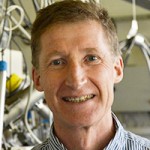
CARDINAUD Christophe
Directeur de Recherche CNRS
Fonction :
Chercheur CNRS
Expertises :
- Gravure de matériaux par plasma froids basse pression.
- Diagnostics des plasmas (spectrométrie d’émission optique, spectrométrie de masse, sondes électrostatiques).
- Caractérisation de surface (XPS, ellipsométrie).
Principales thématiques de recherche :
- Procédés plasmas rf à basse pression et étude des mécanismes d’interaction plasma – surface pour la gravure ou le traitement de matériaux.
- Gravure de V2O3
- Mécanismes d’interaction plasma – surface à basse température
Projets de recherche en cours :
Projet ANR 20-CE24-0014-02 PSICryo « Understanding plasma-surface interactions in cryogenic etching for advanced patterning applications », associant le LTM-Grenoble (porteur), le GREMI-Orléans et l’IMN-Nantes. Pour l’IMN il s’agit d’étudier les mécanismes de surface (chimisorption vs physisorption) impliqués dans les procédés de cryogravure, notamment en vue d’une gravure contrôlée à l’échelle atomique (ALE - atomic layer etching).
https://anr.fr/Projet-ANR-20-CE24-0014
Biographie :
Après un parcours universitaire et une thèse sur la caractérisation structurale de semi-conducteurs amorphes SiGe : H et Si : H,Cl par spectroscopies X et électronique, j’ai intégré le CNRS pour y travailler sur la caractérisation de surfaces et de matériaux en couches minces traités par plasma froids (1985-1988). Mon centre d’intérêt s’est alors étendu à l’étude des procédés plasma pour la gravure de matériaux semi-conducteurs, diélectriques ou métalliques (1988-présent).
Je me suis intéressé et formé à la physique des décharges excitées en radiofréquence dans les gaz à basse pression (~1 Pa) et à leurs diagnostics. J’ai ainsi développé une expertise sur la gravure des matériaux pour la microélectronique : Si, SiO2, organosiliciés low-κ, verres de silice et W en plasma fluoré (SF6, CHF3, C2F6), sur la gravure de matériaux pour la photonique : InP et CdHgTe en plasma CH4-H2 et dérivés, verres chalcogénure en plasmas fluorés et CH4-H2. Cela m’a amené également à développer une expertise sur la caractérisation physique et chimique des plasmas par spectrométrie de masse, spectrométrie optique en émission et sondes électrostatiques, ainsi que sur la caractérisation des surfaces et des interfaces par spectrométrie de photoélectrons, ellipsométrie et microscopie de champ proche.
Mon activité de recherche actuelle concerne la gravure de l’oxyde de vanadium V2O3 et les mécanismes fondamentaux de gravure et d’interaction plasma et gaz avec la surface à température cryogénique.
Publications :
122
Publications majeures illustratives :
Articles de revue
Ch. Cardinaud, M-C. Peignon, P.Y. Tessier “Plasma etching: principles, mechanisms, application to micro- and nanotechnologies” Appl. Surf. Sci. 164, 72-83 2000.
http://dx.doi.org/10.1016/S0169-4332(00)00328-7
C. Cardinaud “Fluorine-based plasmas: Main features and application in micro-and nanotechnology and in surface treatment” Comptes Rendus Chimie de l’Académie des Sciences 21, 723-739 2018.
https://doi.org/10.1016/j.crci.2018.01.009
Articles sur les mécanismes de gravure par plasma, les diagnostics des plasmas, l’interaction plasma-surface
Ch. Cardinaud, A. Rhounna, G. Turban, B. Grolleau “Contamination of silicon surfaces exposed to CHF3 plasmas: An XPS study of the film-surface interface” J. Electrochem. Soc. 135, 1472-1477, 1988. http://dx.doi.org/10.1149/1.2096034
Ch. Cardinaud, G. Turban “Mechanistic studies of the initial stages of etching of Si and SiO2 in a CHF3 plasma” Appl. Surf. Sci. 45, 109-120, 1990.
http://dx.doi.org/10.1016/0169-4332(90)90061-4
M-C. Peignon, Ch. Cardinaud, G. Turban “A kinetic study of reactive ion etching of tungsten in SF6 - O2 RF plasmas” J. Electrochem. Soc. 140, 505-512, 1993.
http://dx.doi.org/10.1149/1.2221077
Y. Feurprier, Ch. Cardinaud, G. Turban “Influence of the gas mixture on the reactive ion etching of InP in CH4 - H2 plasmas” J. Vacuum Sci. & Technol. B 15, 1733-1740 1997.
http://dx.doi.org/10.1116/1.589363
F. Gaboriau, G. Cartry, M-C. Peignon, Ch. Cardinaud “Selective and deep plasma etching of SiO2: comparison between different fluorocarbon gases (CF4, C2F6, CHF3) mixed with CH4 or H2 and influence of residence time” J. Vacuum Sci. & Technol. B 20, 1514-1521 2002.
http://dx.doi.org/10.1116/1.1495502
S. Bouchoule, R. Chanson, A. Pageau, E. Cambril, S. Guilet, A. Rhallabi, C. Cardinaud “Surface chemistry of InP ridge structures etched in Cl2-based plasma analysed with angular XPS” J. Vacuum Sci. & Technol. A 33, 05E124 2015.
http://dx.doi.org/10.1116/1.4927541
J. Piet, W. Faider, A. Girard, F. Boulard and C. Cardinaud “Investigation of organic precursors and plasma mixtures allowing control of carbon passivation when etching HgCdTe in hydrocarbon-based inductively coupled plasmas” J. Vacuum Sci. & Technol. A 38, 053005 2020. https://doi.org/10.1116/6.0000397
T. Meyer, A. Girard, G. Le Dain, A. Rhallabi, E. Baudet, M. Baillieul, V. Nazabal, P. Němec and C. Cardinaud “Mass spectrometry and in situ X-ray Photoelectron Spectroscopy investigations of organometallic species induced by the etching of germanium, antimony and selenium in a methane-based plasma” Plasma Sources Sci. & Technol. 32 (2023) 085003.
https://doi.org/10.1088/1361-6595/aceaa5
Articles liés à l’expertise en analyse XPS – collaborations extérieures
K. Tsougeni, N. Vourdas, A. Tserepi, E. Gogolides, C. Cardinaud “Mechanisms of Oxygen Plasma Nanotexturing of Organic Polymer Surfaces: From Stable Super Hydrophilic to Super Hydrophobic Surfaces” Langmuir 25, 11748-11759 2009.
http://dx.doi.org/10.1021/la901072z
E. Baudet, C. Cardinaud, A. Girard, E. Rinnert, K. Michel, B. Bureau, V. Nazabal “Structural analysis of RF sputtered Ge-Sb-Se thin films by Raman and X-ray photoelectron spectroscopies” J. Non-Cryst. Solids 444, 64-72 2016.
http://dx.doi.org/10.1016/j.jnoncrysol.2016.04.017
Lien vers publi HAL : https://hal.science/search/index?q=cardinaud+christophe
Lien vers orcid : https://orcid.org/0000-0002-9753-8848
Autres liens :
CARDINAUD Christophe
Chercheur équipe PCM
prenom.nom@cnrs-imn.fr
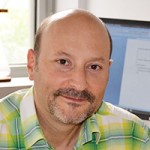
CARIO Laurent
Directeur de Recherche CNRS
Fonction:
Research Director DR 1
- Coordinator of the Mott-IA maturation project on artificial Neural Networks
- Laureate of the RISE 2024 program for the creation of the startup Mottronix.
- Member of the International Research Laboratory (IRL) DYNACOM
Former positions:
2018 – 2023 Team Leader Physique des Matériaux et Nanostructures (PMN)
2015 – 2018 Co-director of the team Physique des Matériaux et Nanostructures (PMN)
2000 – 2021 Associate researcher and then Director of Research DR2 Institut des Matériaux de Nantes Jean Rouxel
Education:
- 2011 Habilitation à diriger des recherches (higher PhD) Faculty of sciences / Nantes University
- 1998 – 2000 Associate Researcher - Cornell University (USA). Advisor : Franck J. Disalvo
- 1995 - 1998 PhD in material sciences – Nantes University
Advisors : Alain Meerschaut /Jean Rouxel (Institut des Matériaux Jean Rouxel)
Research themes:
- Solid State chemistry and physics.
- Resistive switching in chalcogenide and oxide Mott Insulators. Application for non-volatile memories (RRAM/ Memristors) or as new neuromorphic components.
- Topochemical synthesis of new (oxy-)chalcogenide compounds.
Distinctions:
- 2023 Scientific grand prize of the french physical society (SFP)
- 2012, 17 et 23 CNRS Award of scientific excellence
- 1998 Bourse LAVOISIER du Ministère des Affaires Etrangères
Scientific production:
175 Publications, 2 book chapters, 65 invited conferences, 6 patents
CARIO Laurent
Chercheur équipe PMN
prenom.nom@cnrs-imn.fr
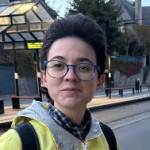
CASTELLAN Giorgia
Doctorante équipe MIOPS
prenom.nom@cnrs-imn.fr
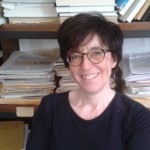
CATTIN-GUENADEZ Linda
Maître de Conférences
CATTIN-GUENADEZ Linda
Enseignante-chercheure équipe MIOPS
prenom.nom@cnrs-imn.fr
CHALARD Cassandre
Doctorante équipe ST2E
prenom.nom@cnrs-imn.fr
CHARROIS Martin
Doctorant équipe ID2M
prenom.nom@cnrs-imn.fr
CHARTRAIN Coline
Fonctions :
Étudiante en doctorat
Principales thématiques de recherche :
Modélisation de plasma, procédé HiPIMS, couches minces, titane
Projets de recherche en cours :
Doctorat sur la modélisation multi-échelle du plasma en pulvérisation magnétron à impulsions de haute puissance (HiPIMS) pour le dépôt de couches minces de titane.
Activités dans la communauté de recherche :
Co-présidente de l’association SYRA.
Représentante des doctorants de Nantes auprès du Collège Doctoral Matière, Molécules, Matériaux et Géosciences (3MG).
Biographie :
Après un Master Science de la Matière (Matériaux Innovants et Systèmes pour l’énergie) à Nantes Université, j’ai eu l’opportunité de développer mes compétences au sein de l’équipe PCM à l’IMN, lors d’un stage de recherche sur les plasmas de gravure de semi-conducteurs, avant de me lancer dans un doctorat au sein de la même équipe, sur la modélisation de plasma en procédé HiPIMS, pour le dépôt de couches minces de titane.
Je m’investis dans l’association des doctorants SYRA de l’IMN, en tant que co-présidente. J’accorde également une grande importance au bien-être des doctorants et ai eu la chance d’être élue représentante des doctorants auprès du Collège Doctoral Matière, Molécules, Matériaux et Géosciences (3MG).
Enseignement :
UE XLG4PU050 Modélisation pour la Physique 2
Lien vers orcid : https://orcid.org/0009-0006-8897-197X?lang=en
Lien LinkedIn : www.linkedin.com/in/coline-chartrain-4372b3223
CHARTRAIN Coline
Doctorante équipe PCM
prenom.nom@cnrs-imn.fr
CHAUVET Olivier
Professeur des Universités
CHAUVET Olivier
Enseignant-chercheur équipe PMN
prenom.nom@cnrs-imn.fr
CHIRON Jean-Noël
Service infrastructure
prenom.nom@cnrs-imn.fr